
Euamiana torniplaga
Barnes & McDunnough, 1916
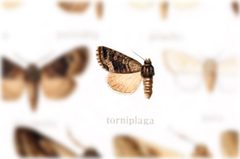
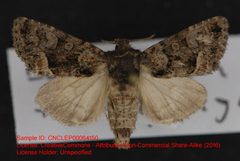
Euamiana torniplaga is a noctuid described by Barnes and McDunnough in 1916. It belongs to the Euamiana, a small group within the Noctuinae. The species was originally described under the basionym Nocloa torniplaga before being transferred to Euamiana. Very few observations exist in public databases, suggesting it is either rare, poorly sampled, or restricted to specific .
Pronunciation
How to pronounce Euamiana torniplaga: //juːəˈmaɪənə tɔːrnɪˈplɑːɡə//
These audio files are automatically generated. While they are not always 100% accurate, they are a good starting point.
Identification
The Euamiana can be distinguished from related noctuine genera by genitalic characters, particularly in the male valvae and structure. Specific diagnostic features for E. torniplaga require examination of type material; the epithet "torniplaga" (from Latin "tornare" to turn and Greek "plaga" stripe/blow) may refer to a distinctive wing pattern element, though original description details are needed for confirmation.
Images
Distribution
Recorded from North America. Specific state or provincial records are not clearly documented in available sources.
Similar Taxa
- Nocloa spp.Formerly classified in this ; separation requires genitalic examination and reference to original description
- Other Euamiana species contains few ; distinguishing E. torniplaga from depends on subtle wing pattern and genitalic differences
More Details
Taxonomic history
Originally described as Nocloa torniplaga Barnes & McDunnough, 1916, then transferred to Euamiana. The Euamiana was established to accommodate with distinctive male genitalia structures differing from Nocloa sensu stricto.
Data scarcity
Only 5 observations recorded in iNaturalist as of source date, indicating significant knowledge gaps in distribution, , and requirements.