
Miracavira brillians
Barnes, 1901
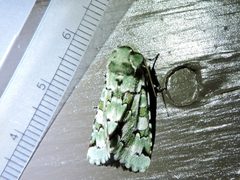
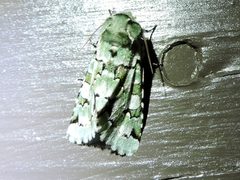
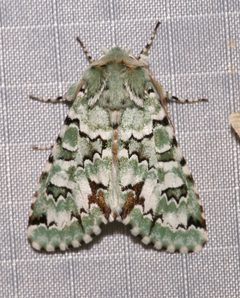
Miracavira brillians is a noctuid described by William Barnes in 1901. The is known from arid regions of southwestern North America, with documented records from Arizona. have a wingspan of approximately 37 mm. Larval development has been observed on Ptelea trifoliata, a native shrub in the citrus .
Pronunciation
How to pronounce Miracavira brillians: /ˌmɪrəˈkævɪrə ˈbrɪliˌænz/
These audio files are automatically generated. While they are not always 100% accurate, they are a good starting point.
Identification
Positive identification requires examination of genitalia or comparison with closely related in the Miracavira. The moderate wingspan of 37 mm distinguishes it from smaller and larger , though precise size ranges for related species are needed for reliable field identification.
Images
Appearance
have a wingspan of approximately 37 mm. Specific coloration and pattern details are not documented in available sources.
Habitat
Associated with supporting Ptelea trifoliata, suggesting arid or semi-arid shrublands and riparian zones in the southwestern United States.
Distribution
Documented from North America, specifically Arizona. The full extent of its range within the southwestern United States and adjacent Mexico remains unclear.
Diet
Larvae have been reared on Ptelea trifoliata (hop-tree), a deciduous shrub in the Rutaceae. feeding habits are not documented.
Host Associations
- Ptelea trifoliata - larval plantDocumented through rearing records
Life Cycle
Larval stage feeds on Ptelea trifoliata. Complete with , larva, pupa, and stages; specific timing and number of per year are not documented.
Ecological Role
Larval herbivore on Ptelea trifoliata. Specific roles in , pollination, or nutrient cycling are not documented.
Similar Taxa
- Other Miracavira species share general noctuid and overlap in southwestern North American distribution; precise identification requires dissection or analysis
- Feralia speciesFormerly classified under Feralia; similar size range and associations may cause confusion
More Details
Taxonomic history
Originally described as Feralia brillians by Barnes in 1901, later transferred to the Miracavira. The etymology of the specific epithet 'brillians' is not documented.