
Chloronycta
Schmidt & Anweiler, 2014
Species Guides
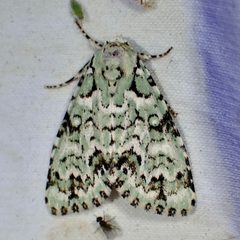
1Chloronycta is a in the Noctuidae, established in 2014 to accommodate the C. tybo, originally described in 1904. The genus occurs in mountainous regions from Mexico to the southwestern United States. Larvae are specialized feeders on Fraxinus velutina (velvet ash). An additional undescribed species is known from Mexico.
Pronunciation
How to pronounce Chloronycta: //ˈklɔː.roʊˌnɪk.tə//
These audio files are automatically generated. While they are not always 100% accurate, they are a good starting point.
Identification
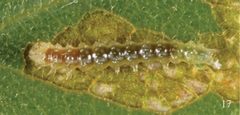
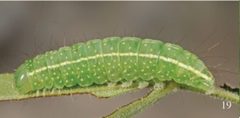
The is distinguished by its small to medium size (wingspan 34–36 mm) and association with riparian in mountainous regions. are and can be distinguished from similar noctuids by their specific habitat and . Larvae are waxy green with pale green , reaching 26 mm at maturity, and exhibit distinctive feeding : early instars skeletonize leaves from the lower surface, while later instars feed from leaf edges on the underside.
Images
Habitat
Canyons and mid-elevation wooded areas, particularly riparian corridors in mountainous terrain.
Distribution
Mountainous regions from Mexico north to southeastern Arizona and southwestern New Mexico, extending through the Sierra Madre Occidental.
Seasonality
active in January and from July to September.
Diet
Larvae feed exclusively on Fraxinus velutina (velvet ash).
Host Associations
- Fraxinus velutina - larval plantvelvet ash
Life Cycle
to with five larval instars. Early instars (first two) skeletonize patches of leaf tissue from the lower leaf surface. Middle and late instars feed from leaf edges, always from the underside. Last-instar larvae reach approximately 26 mm. Prior to , larvae tunnel into punky wood to form a pupal crypt with minimal silk, using silk only to weave a -silk cover.
Behavior
Larvae exhibit stereotyped feeding positions: early instars skeletonize leaves, later instars feed from leaf edges on the underside. occurs in self-constructed crypts in punky wood rather than in soil or leaf litter.
Ecological Role
Specialized herbivore on velvet ash in riparian ; contributes to nutrient cycling through leaf herbivory and wood decomposition via pupal crypt construction.
Similar Taxa
- Other NoctuidaeChloronycta can be distinguished by its specific association with Fraxinus velutina, distinctive larval feeding , and pupal crypt construction in punky wood—traits not commonly combined in related .