
Acronicta innotata
Guenée, 1852
Unmarked Dagger, birch dagger, unmarked dagger moth
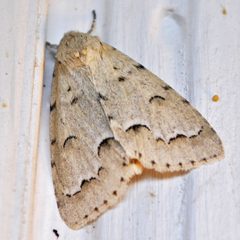
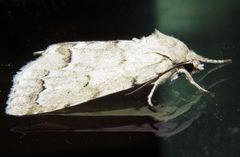
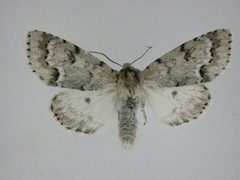
Acronicta innotata, commonly known as the unmarked dagger or birch dagger, is a noctuid moth first described by Guenée in 1852. It is widely distributed across northern North America, from Newfoundland to British Columbia, with southern extensions along the eastern United States. The species is named for its relatively plain wing pattern compared to other dagger moths, and its larvae feed on the leaves of several deciduous tree species.
Pronunciation
How to pronounce Acronicta innotata: /əˈkrɒnɪktə ˌɪnəʊˈtɑːtə/
These audio files are automatically generated. While they are not always 100% accurate, they are a good starting point.
Identification
The unmarked dagger can be distinguished from other Acronicta by its relatively plain, grayish forewings lacking prominent dark spots, streaks, or dagger-like markings. The species name 'innotata' (meaning 'unmarked') reflects this characteristic. It is most similar to other plain-colored noctuids but can be separated by its specific wing shape and the combination of its size, period, and geographic range. Dissection or may be required for definitive identification in areas where similar species overlap.
Images
Habitat
Found in deciduous and mixed forests, woodlands, and areas with tree . Occurs in riparian zones with alder, birch, poplar, and willow, as well as upland forests containing hickory and cherry.
Distribution
Transcontinental in northern North America. Range extends from Newfoundland to British Columbia across Canada, and southward in the United States along the northern tier of states adjacent to Canada. In the eastern United States, the range extends south to North Carolina and Kentucky.
Seasonality
are active from May to August, with exact timing varying by location and latitude. The period spans late spring through mid-summer.
Diet
Larvae feed on the leaves of alder (Alnus), birch (Betula), cherry (Prunus), hickory (Carya), poplar (Populus), and willow (Salix). feeding habits are not documented.
Host Associations
- Alnus - larval foodplantalder
- Betula - larval foodplantbirch
- Prunus - larval foodplantcherry
- Carya - larval foodplanthickory
- Populus - larval foodplantpoplar
- Salix - larval foodplantwillow
Life Cycle
Complete with , larva, pupa, and stages. Larvae are present during the growing season, feeding on tree foliage. Adults emerge in late spring to mid-summer. Specific details of site and stage are not documented.
Behavior
are and attracted to light. Larvae are solitary leaf feeders on trees.
Ecological Role
Larvae function as primary consumers, feeding on deciduous tree foliage. They contribute to nutrient cycling through herbivory and serve as prey for various and . The is not considered a significant forest pest.
Human Relevance
No significant economic or medical importance. The is of interest to lepidopterists and naturalists. Like many , may be attracted to artificial lights at night.
Similar Taxa
- Acronicta betulaeAlso known as the birch dagger and shares similar plants and confusion; A. betulae has more distinct forewing markings including a darker discal spot and more pronounced patterning
- Other Acronicta speciesMost other dagger moths have more prominent dark spots, streaks, or 'dagger' marks on the forewings; A. innotata is notably plainer
More Details
Etymology
The specific epithet 'innotata' derives from Latin, meaning 'unmarked' or 'without marks,' referring to the relatively plain wing pattern of this compared to its .