
Tarache quadriplaga
(Smith, 1900)
Four-patched Bird-dropping Moth
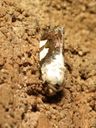
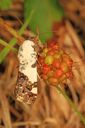
Tarache quadriplaga is a of in the Noctuidae, first described by Smith in 1900. It belongs to the bird-dropping moth group, named for the distinctive appearance of its larvae and/or that resembles bird droppings—a form of protective mimicry. The species is found in North America and is classified within the Acontiinae.
Pronunciation
How to pronounce Tarache quadriplaga: /ˈta.ra.keɪ ˌkwɒ.drəˈpleɪ.ɡə/
These audio files are automatically generated. While they are not always 100% accurate, they are a good starting point.
Identification
Distinguished from similar Tarache by the specific pattern of four dark patches or bands on the wings referenced in its name. The bird-dropping appearance separates it from many other noctuid , but precise identification requires examination of wing pattern details and genitalia. Similar species include other Tarache and Acontia species with overlapping ranges; dissection or molecular analysis may be necessary for definitive identification.
Images
Appearance
exhibit the characteristic bird-dropping mimicry typical of many Acontiinae , with mottled gray, white, and black coloration that creates a disrupted, irregular pattern resembling avian . The specific epithet 'quadriplaga' (meaning 'four-banded' or 'four-patched') likely refers to four distinct dark patches or bands on the wings. As with other Tarache , adults are relatively small with a wingspan typical of the .
Habitat
Specific details are not well documented in available sources. Based on related in the , it likely occurs in open habitats including fields, meadows, and disturbed areas where plants grow.
Distribution
Found in North America. Specific range details beyond this continental-level distribution are not available in the provided sources.
Diet
Larval plants are not documented in available sources. Related Tarache feed on various herbaceous plants, particularly in the mallow (Malvaceae), but this cannot be confirmed for T. quadriplaga specifically.
Ecological Role
As a member of the bird-dropping moth guild, contribute to the diversity of -based defensive strategies in noctuid . The bird-dropping mimicry likely reduces risk from visually hunting such as birds and lizards.
Human Relevance
Not known to be of significant economic importance. The bird-dropping mimicry makes it an interesting example of evolutionary for natural history education and study of defensive mimicry in insects.
Similar Taxa
- Tarache delectaSimilar and bird-dropping appearance; T. delecta is known to feed on Hibiscus (mallows) and has been documented as a pest of ornamental mallows, but differs in specific wing pattern and association
- Acontia speciesFormerly classified in this and shares similar and defensive mimicry; some Acontia may be difficult to distinguish without examination of genitalia
More Details
Taxonomic History
The was originally described as Acontia quadriplaga by Smith in 1900, but has since been transferred to the Tarache. Some sources (e.g., GBIF) still list it under Acontia quadriplaga as a synonym, reflecting ongoing taxonomic refinement in this group.
Observation Data
iNaturalist records over 3,200 observations of this , indicating it is relatively well-documented by citizen scientists, though detailed biological studies appear limited in the available literature.