
Ponometia candefacta
(Hübner, 1831)
Olive-shaded Bird-dropping Moth
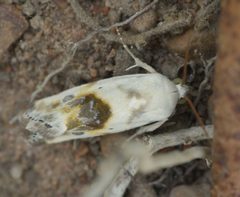
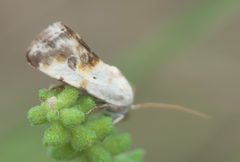
Ponometia candefacta, commonly known as the olive-shaded bird-dropping moth, is a small noctuid native to North America. It has been deliberately introduced to Russia as a agent for common ragweed (Ambrosia artemisiifolia). The inhabits dry, disturbed, weedy areas at low elevations and is active during summer months.

Pronunciation
How to pronounce Ponometia candefacta: //pɒn.oʊˈmiː.ʃə kæn.dəˈfæk.tə//
These audio files are automatically generated. While they are not always 100% accurate, they are a good starting point.
Identification
can be identified by their small size (18–22 mm wingspan) and olive-shaded, bird-dropping-like appearance. The green larvae with a white lateral stripe are distinctive among Noctuidae feeding on Asteraceae. The may be confused with other bird-dropping mimics in the , but the specific olive coloration and geographic range help distinguish it.
Images
Habitat
Dry, weedy, disturbed areas at low elevations.
Distribution
Native to North America, recorded from the northern United States through southern Mexico. Introduced to Russia for purposes. Records from Belgium, France, and the Netherlands are considered doubtful; presence in Great Britain is documented.
Seasonality
are active from April to September, with peak activity in summer.
Diet
Larvae feed on Asteraceae, specifically including Aster and Ambrosia .
Host Associations
- Aster - larval plant
- Ambrosia - larval plant
- Ambrosia artemisiifolia - target for common ragweed
Ecological Role
Used as a agent for ragweed (Ambrosia artemisiifolia) in Russia. As a native herbivore in North America, it contributes to natural regulation of Asteraceae in disturbed .
Human Relevance
Intentionally introduced to Russia as a agent for common ragweed, an plant and significant allergen.
Similar Taxa
- Other Ponometia speciesSimilar bird-dropping mimicry and size; distinguished by specific coloration and pattern details
- Other Acontiinae mothsShared characteristics; require examination of genitalia or specific wing patterns for definitive identification