
Paectes pygmaea
Hübner, 1818
Pygmy Paectes Moth, pygmy paectes
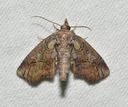
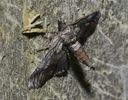
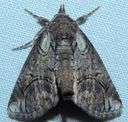
Paectes pygmaea is a small in the Euteliidae, first described by Jacob Hübner in 1818. It is distributed across North America and is commonly known as the pygmy paectes. The has been assigned MONA/Hodges number 8959 for North American moth classification. Like other members of its , it is a species attracted to light.
Pronunciation
How to pronounce Paectes pygmaea: /ˈpaɪkt.iːz pɪɡˈmiː.ə/
These audio files are automatically generated. While they are not always 100% accurate, they are a good starting point.
Identification
Can be distinguished from other small North American by genitalic characters, particularly features of the male and female reproductive structures. Related in the Paectes arcigera show similar wing patterns but differ in reproductive ; P. pygmaea predates these descriptions and is distinguished by its original type locality and description. The MONA/Hodges number 8959 provides a unique identifier for North American records.
Images
Appearance
Small with typical euteliid body plan. Specific wing pattern details are not well documented in available sources, though related Paectes often exhibit subtle, camouflaged coloration.
Distribution
North America. Specific preferences within this range are not well documented.
Behavior
; attracted to light sources. This is the primary behavioral observation recorded for this .
Human Relevance
Used as a reference in North American classification systems; the MONA/Hodges number 8959 facilitates standardized recording in citizen science and professional entomological surveys.
Similar Taxa
- Paectes arcigera species complexRelated in this complex show similar wing patterns but were distinguished from P. pygmaea and each other through dissection of genitalic characters, revealing cryptic diversity not apparent from external .
- Other small EuteliidaeShare -level characteristics of body form and ; accurate identification requires examination of genitalia or reference to specific collection data and MONA number.
More Details
Nomenclature
The has been treated as a synonym in some sources (Catalogue of Life) but is accepted in others (GBIF, iNaturalist). The original description by Hübner in 1818 establishes priority.
Classification Number
MONA ( of North America) or Hodges number 8959 provides a stable identifier for this in North American faunal works.
Sources and further reading
- BugGuide
- Wikipedia
- GBIF taxonomy match
- iNaturalist taxon
- NCBI Taxonomy
- Catalogue of Life
- Tiny Insect, Big Questions: Is the World's Smallest Dragonfly Splitting Into Two Species?
- A suitable ode to Warren Knaus | Beetles In The Bush
- Bug Eric: National Moth Week Recap for Colorado Springs
- Surveying for the Maerdy Monster Millipede - Buglife Blog - Buglife
- Cynnal arolygon Miltroed Anghenfil y Maerdy - Buglife Blog - Buglife
- Uncategorized | Blog - Part 42