
Scoliopteryx
Germar, 1810
herald moth
Species Guides
1- Scoliopteryx libatrix(Herald Moth)
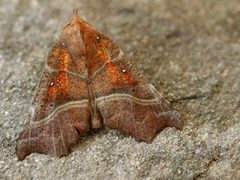
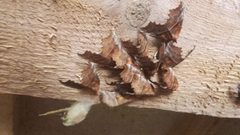
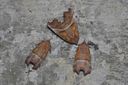
Scoliopteryx is a of in the Erebidae, established by Ernst Friedrich Germar in 1810. The genus contains two described , including Scoliopteryx libatrix (the herald moth), which is notable for its troglophilic and cave-dwelling habits during winter. Species in this genus have been studied for their unique ecological associations, including shared with insectivorous bats and susceptibility to fungi.
Pronunciation
How to pronounce Scoliopteryx: /skɒliˈɒptərɪks/
These audio files are automatically generated. While they are not always 100% accurate, they are a good starting point.
Images
Habitat
Caves, mines, and similar subterranean environments. The herald (S. libatrix) overwinters in cave entrance areas, roosting on ceilings in healthy ; infected individuals have been observed on cave floors and rock ledges.
Distribution
Europe (Denmark, Norway, Sweden), British Isles (southern England, Northern Ireland, Republic of Ireland), and North America (Vermont, USA). Specific records from caves and mines in Devon, Norfolk, Fermanagh, and Sligo.
Seasonality
overwinter in caves and mines; active period likely spring through autumn based on hibernation pattern.
Life Cycle
Overwinters as in caves and mines; hibernation occurs in shared with insectivorous bats.
Behavior
Troglophilic; forms on cave ceilings. Exhibits acoustic sensitivity to ultrasound (20–40 kHz) overlapping with bat echolocation frequencies, though stationary individuals do not show avoidance responses to ultrasonic pulses. This reduced behavioral response during hibernation contrasts with typical anti- reactions in active noctuid .
Ecological Role
Serves as for fungi including Samsoniella scoliopterygis. Participates in cave as a troglophilic ; co-occurs with hibernating bats, potentially influencing -prey dynamics in subterranean environments.
More Details
Notable species
Scoliopteryx libatrix (Linnaeus, 1758), the herald , is the best-studied in the and the type of ecological research on cave-dwelling moths.
Research significance
S. libatrix has been used as a model organism for studying -bat acoustic interactions in hibernation contexts and for describing new fungal .
Sources and further reading
- BugGuide
- Wikipedia
- GBIF taxonomy match
- iNaturalist taxon
- NCBI Taxonomy
- Catalogue of Life
- Acoustic responsiveness of Scoliopteryx libatrix L. (Lepidoptera: Noctuidae), a moth that shares hibernacula with some insectivorous bats
- A new species of Samsoniella (Cordycipitaceae: Hypocreales) on the herald moth, Scoliopteryx libatrix (Erebidae: Noctuoidea), from caves in the British Isles