
Lymantriini
Hampson, 1893
Genus Guides
1- Lymantria(tussock moths)
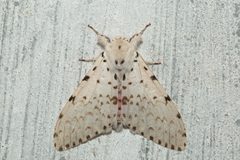
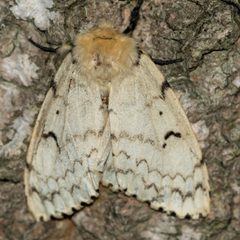
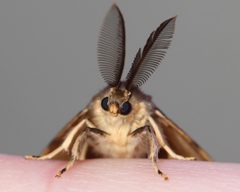
Lymantriini is a tribe of in the Erebidae, Lymantriinae. Members are characterized by distinctive wing patterns including dark, usually zig-zag banding on the forewings, V-shaped marks, and the presence of discal and spots. The tribe is considered taxonomically weakly defined compared to related tribes, lacking strongly definitive morphological features. The Lymantria is the most prominent member. The tribe occurs across tropical Afro-Eurasia and North America.
Pronunciation
How to pronounce Lymantriini: /lɪˌmanˈtriːɪnaɪ/
These audio files are automatically generated. While they are not always 100% accurate, they are a good starting point.
Identification
Distinguished from other Lymantriinae tribes by forewing pattern: dark, usually zig-zag (sometimes crescent-shaped) banding, V-shaped marks, discal spot, and spot. Lacks an areola. The tribe is noted as taxonomically weakly defined, making separation from related tribes (Nygmiini, Leucomini, Arctornithini) difficult based on alone.
Images
Distribution
Tropical regions of Afro-Eurasia and North America. Present in both Nearctic and Palearctic zones.
Diet
; larvae feed on multiple plant rather than specializing on a single .
Human Relevance
Includes Lymantria dispar (gypsy moth), a notorious pest causing extensive defoliation of forests. Some members are significant forestry pests due to larval feeding habits.
Similar Taxa
- NygmiiniSplit from Lymantriini by Holloway (2006); distinguished by more strongly definitive morphological features that Lymantriini lacks.
- LeucominiSplit from Lymantriini by Holloway (2006); possesses strongly definitive features absent in Lymantriini.
- ArctornithiniSplit from Lymantriini by Holloway (2006); characterized by strongly definitive morphological features.
- OrgyiiniOriginally described alongside Lymantriini by Ferguson as one of two tribes in the group; historically paired in classification.
More Details
Taxonomic History
Originally described by Douglas C. Ferguson as one of two tribes. Holloway (2006) split three new tribes from Lymantriini, explicitly noting that Lymantriini is 'possibly the most weakly defined' of the tribes presented and 'lacks all the strongly definitive features of the other tribes.'
Spelling Variation
Sometimes misspelled as 'Lymantrini' in literature.