
Hypocala
Guenée, 1852
Species Guides
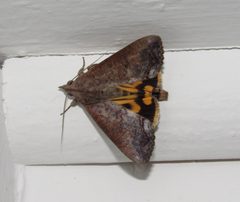
1- Hypocala andremona(andremona moth)
Hypocala is a of in the Erebidae, Calpinae, first described by Achille Guenée in 1852. The genus contains approximately 15 described distributed across multiple continents. are characterized by distinctive palpal and forewing . Larvae possess four pairs of abdominal , a trait noted in the original description.


Pronunciation
How to pronounce Hypocala: /hɪˈpoʊkələ/
These audio files are automatically generated. While they are not always 100% accurate, they are a good starting point.
Identification
Distinguished from related Calpinae by the combination of porrect, rostriform palpi and forewings with arched leading to a rectangular apex. The smoothly scaled and , plus spineless tibiae, provide additional diagnostic characters. Male specimens can be identified by ciliated .
Images
Distribution
documented from Africa (including South Africa, Madagascar), Asia, and North America (Vermont, USA). Distribution varies by species; some species appear restricted to specific regions while others have broader ranges.
Similar Taxa
More Details
Taxonomic history
Originally described by Guenée in 1852. Some historical sources placed Hypocala in Noctuidae; modern classification places it in Erebidae, Calpinae.
Species diversity
Approximately 15 described , including notable species such as H. andremona (Cramer, 1784), H. rostrata (Fabricius, 1794), and the type species H. subsatura Guenée, 1852.