
Colobochyla interpuncta
Grote, 1872
Yellow-lined Owlet, Swamp Belle
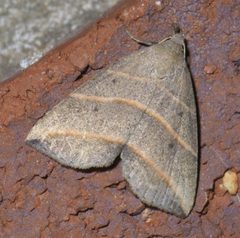
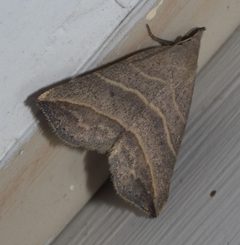
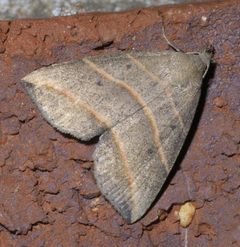
Colobochyla interpuncta, known as the yellow-lined owlet or swamp belle, is a small erebid found in North American wetlands. have a wingspan of 20–24 mm and are active from April through September, with multiple per year in southern portions of its range. The was first described by Augustus Radcliffe Grote in 1872. Larvae are known to feed on willow (Salix).
Pronunciation
How to pronounce Colobochyla interpuncta: /kəˌlɒbɵˈkaɪlə ˌɪntərˈpʌŋktə/
These audio files are automatically generated. While they are not always 100% accurate, they are a good starting point.
Identification
Distinguished from similar small erebid by combination of: small size (20–24 mm wingspan), yellow streaking on forewings, and consistent association with wetland . The specific epithet 'interpuncta' (meaning 'spotted between') may refer to pattern elements, but diagnostic separation from requires examination. Hodges number 8411.
Images
Habitat
Wetlands, including swamps and marshy areas. Consistently associated with willow (Salix) stands, which serve as larval plants.
Distribution
Eastern North America: from Wisconsin and Ontario/Quebec (Nova Scotia region) south to Florida and Texas. Core range spans the eastern deciduous forest and Gulf Coastal Plain regions.
Seasonality
active April to September. Two per year documented in Ohio and Connecticut; additional generations occur farther south. period spans spring through late summer.
Diet
Larvae feed on willow (Salix spp.). feeding habits not documented.
Host Associations
- Salix - larval plantSpecific willow not identified in available sources.
Life Cycle
Multivoltine: two per year in northern portions of range (Ohio, Connecticut), more generations southward. Complete with , larva, pupa, and stages; specific details of site and stage not documented.
Behavior
activity typical of erebid . Attracted to light. Specific behavioral observations beyond period not documented in available sources.
Ecological Role
Larval herbivore on willow, contributing to nutrient cycling in wetland . Role as prey for birds, bats, and other presumed but not quantified.
Human Relevance
No documented economic or medical significance. Occasionally encountered by wetland researchers and enthusiasts. Not a pest .
Similar Taxa
- Other Colobochyla species contains multiple small, streaked erebid ; accurate identification often requires genitalia examination or geographic/ context.
- Small Boletobiinae moths (Erebidae)Numerous similar-sized, similarly patterned in same ; yellow-lined owlet distinguished by consistent wetland association and willow relationship.
More Details
Taxonomic history
Described by Augustus Radcliffe Grote in 1872. The 'swamp belle' reflects early naturalists' recognition of its wetland preference.
Observation frequency
Over 1,200 observations documented on iNaturalist, indicating it is regularly encountered within its range but not exceptionally abundant.