
Zanclognatha cruralis
Guenée, 1854
Early Fan-foot, early zanclognatha
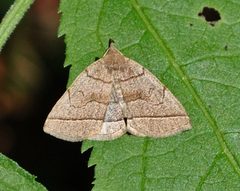
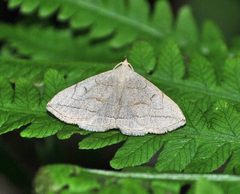
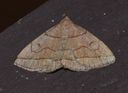
Zanclognatha cruralis, known as the Early Fan-foot, is a litter moth in the Erebidae. It occurs across eastern North America from southern Canada to Florida and Texas. have a wingspan of 28–30 mm and fly from April through July. Southern produce two annually.
Pronunciation
How to pronounce Zanclognatha cruralis: //ˌzæŋkloʊˈɡnæθə kruˈreɪlɪs//
These audio files are automatically generated. While they are not always 100% accurate, they are a good starting point.
Identification
Distinguished from other Zanclognatha by its relatively early period (April–July, peaking before most ). Forewing pattern is generally plainer than Z. laetabilis and Z. protumnusalis, with less contrasting dark markings. Best separated from Z. ochreipennis by wing coloration—Z. cruralis tends toward brown rather than ochre or yellow-brown tones. Genitalia examination may be required for definitive identification from closely similar species.
Images
Appearance
Medium-small with wingspan of 28–30 mm. Forewings are typically pale to medium brown with variable darker markings, including a distinct discal spot and wavy transverse lines. Hindwings are lighter, often whitish or pale gray. Labial palps are elongated and project forward, giving a 'snouted' appearance characteristic of the . Resting posture typically holds wings folded tent-like over the body.
Habitat
Deciduous and mixed woodlands, forest edges, and areas with abundant leaf litter. Associated with moist, shaded environments where larval plants and decaying organic matter accumulate.
Distribution
Eastern North America: from Wisconsin eastward through southern Ontario and Quebec, south to Florida and west to Texas. Core range spans the eastern deciduous forest biome.
Seasonality
active from April to July. Single in northern range; two generations per year in the southern portion of the range (Florida, Texas, and southeastern states).
Life Cycle
Complete with , larva, pupa, and stages. Two annually in southern ; single generation in north. Larval stage likely feeds on decaying leaf litter and detritus, as is typical for Herminiinae, though specific records for this are not well documented.
Behavior
. are attracted to light. Larvae are ground-dwelling and associated with leaf litter decomposition.
Ecological Role
Larvae contribute to leaf litter decomposition and nutrient cycling in forest . serve as prey for including bats and birds.
Human Relevance
Occasionally encountered by enthusiasts at light traps. No economic significance; neither a pest nor a beneficial in agricultural or forestry contexts.
Similar Taxa
- Zanclognatha laetabilisOverlapping range and similar size; distinguished by darker, more contrasting forewing pattern and later season (primarily June–August)
- Zanclognatha protumnusalisSimilar plain brown forewings; separated by later peak period (July–September) and more northerly distribution
- Zanclognatha ochreipennisDistinguished by warmer ochre or yellow-brown forewing coloration versus the cooler brown tones of Z. cruralis
More Details
Etymology
The specific epithet 'cruralis' refers to the legs (Latin: cruralis, 'of the leg'), though the precise reason for this designation is not documented in original description.
Taxonomic History
Originally described as Herminia cruralis by Guenée in 1854, later transferred to Zanclognatha. The basionym reflects its former placement in the genus Herminia.