
Redectis vitrea
Grote, 1878
White-spotted Redectis Moth, Scalloped Snout
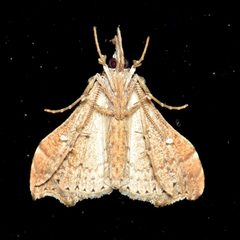
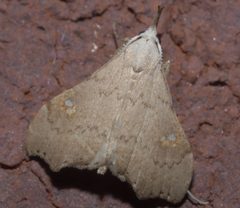
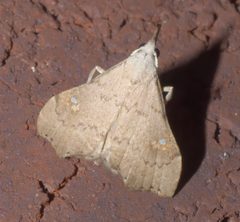
Redectis vitrea is a small litter moth in the Erebidae, first described by Augustus Radcliffe Grote in 1878. It occurs across the eastern and central United States. The exhibits in at least part of its range, with activity spanning summer through early autumn.
Pronunciation
How to pronounce Redectis vitrea: /rɛˈdɛk.tɪs ˈvɪt.rɛ.ə/
These audio files are automatically generated. While they are not always 100% accurate, they are a good starting point.
Identification
Small size (wingspan ~18 mm) and scalloped forewing margin are distinctive features. The specific epithet 'vitrea' (meaning 'of glass' or 'glassy') may refer to translucent or pale wing markings, though this interpretation is speculative. Distinguishing from requires examination of genitalia or detailed wing pattern analysis not available in general sources.
Images
Appearance
Wingspan approximately 18 mm. Forewings with scalloped outer margin. Ground coloration and pattern details not explicitly documented in available sources.
Habitat
Occupies terrestrial supporting larval plants. Associated with areas containing Elaeagnus umbellata, Ceanothus americanus, and Digitaria .
Distribution
Eastern and central United States: from Illinois east to south-eastern Massachusetts, south to Texas and Florida.
Seasonality
active June through October. Two per year documented in Virginia; may vary across range.
Diet
Larvae feed on Elaeagnus umbellata (autumn olive), Ceanothus americanus (New Jersey tea), and Digitaria (crabgrass). feeding habits not documented.
Host Associations
- Elaeagnus umbellata - larval food plant
- Ceanothus americanus - larval food plant
- Digitaria - larval food plant-level identification not specified
Life Cycle
(two annually) in Virginia; complete details otherwise undocumented.
Ecological Role
Larval herbivore; specific functions not documented.
Similar Taxa
- Redectis pygmaea with overlapping eastern North American distribution; requires genitalia examination for reliable separation
- Other Herminiinae litter mothsSimilar small size and cryptic coloration; identification to requires detailed morphological examination