
Phalaenostola larentioides
Grote, 1873
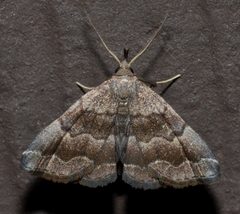
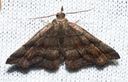
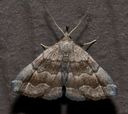
Black-banded Owlet
A small in the Erebidae, first described by Grote in 1873. have a wingspan of 17–24 mm and are active from May to September, with two or more per year. The is widespread in eastern North America.
Pronunciation
How to pronounce Phalaenostola larentioides: /ˌfælənoʊˈstoʊlə ləˌrɛntiˈɔɪdiːz/
These audio files are automatically generated. While they are not always 100% accurate, they are a good starting point.
Identification
Small size (17–24 mm wingspan) and black-banded wing pattern. May be confused with other Phalaenostola ; precise distinguishing features require examination of genitalia or detailed wing pattern analysis not provided in general sources.
Images
Habitat
Associated with grassland and open where larval food sources occur.
Distribution
Eastern North America: New Brunswick and Wisconsin to Maine, south to Florida and Texas, west to Ontario.
Seasonality
active May to September; two or more per year.
Diet
Larvae feed on dead grass, leaf litter, and living clover leaves. diet not specified.
Host Associations
- Clover - larval foodliving leaves consumed
- Leaf litter - larval foodgeneral detritus feeding
Life Cycle
Multivoltine with two or more per year. Complete with , larva, pupa, and stages; specific details of site and stage not documented in sources.
Ecological Role
Larvae function as , contributing to decomposition of plant material, and as herbivores on living clover.
Similar Taxa
- Other Phalaenostola speciesSimilar size and general appearance; require detailed examination for reliable identification.
More Details
Taxonomic history
Originally described by Augustus Radcliffe Grote in 1873. Classified in Herminiinae of Erebidae.