
Phalaenophana
Grote, 1873
litter moths
Species Guides
2- Phalaenophana extremalis
- Phalaenophana pyramusalis(Dark-banded Owlet)
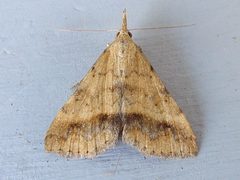
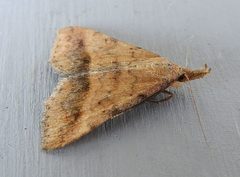
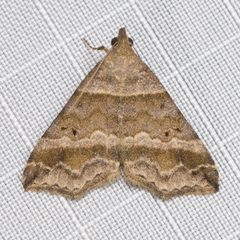
Phalaenophana is a of litter moths in the Hypeninae of the Erebidae, established by Augustus Radcliffe Grote in 1873. The genus contains approximately ten described distributed across the Americas, with records from North America (including Vermont) and South America (Brazil, Ecuador, Chile). The most well-known species is Phalaenophana pyramusalis, commonly called the dark-banded owlet . Current taxonomic databases treat Phalaenophana as a synonym of Phaeolita, though it remains widely used in identification resources.
Pronunciation
How to pronounce Phalaenophana: //fəˌliːnəˈfeɪnə//
These audio files are automatically generated. While they are not always 100% accurate, they are a good starting point.
Images
Habitat
Litter moths in this inhabit environments with abundant leaf litter and decaying organic matter, consistent with the ecological habits of the Hypeninae.
Distribution
Recorded from North America (United States, including Vermont) and South America (Brazil, Ecuador, Chile).
Similar Taxa
- PhaeolitaPhalaenophana is currently treated as a synonym of Phaeolita in Catalogue of Life and GBIF, though the two names have been used interchangeably in different taxonomic treatments.
More Details
Taxonomic Status
Multiple authoritative sources (Catalogue of Life, GBIF) list Phalaenophana as a synonym of Phaeolita, while NCBI and iNaturalist maintain it as a valid . This discrepancy reflects ongoing taxonomic revision in the Hypeninae.
Notable Species
Phalaenophana pyramusalis (dark-banded owlet ) is the most frequently referenced , with substantial observation records on iNaturalist.