
Idia occidentalis
(Smith, 1884)
Western Idia
Idia occidentalis is a small litter moth in the Erebidae, first described by Smith in 1884. It was formerly treated as a of Idia lubricalis but is now recognized as a distinct . The species is found in western North America, with active primarily in late summer in northern parts of its range. It inhabits dry, open environments including arid grasslands and badlands.
Pronunciation
How to pronounce Idia occidentalis: /ˈɪdiə ɑksɪˈdɛntælɪs/
These audio files are automatically generated. While they are not always 100% accurate, they are a good starting point.
Identification
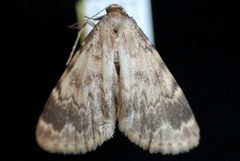
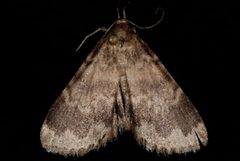
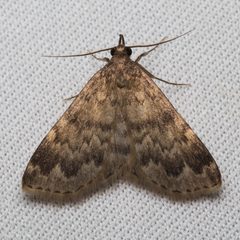
Idia occidentalis can be distinguished from the similar Idia lubricalis by geographic distribution and subtle pattern differences. The has a yellow-brown ground color with a 'cloudy' or diffuse pattern on the wings. Wingspan is approximately 30 mm. The species was historically confused with I. lubricalis, from which it was elevated based on consistent differences.
Images
Habitat
Dry open areas, arid native grasslands, and badlands. Occupies xeric environments in western North America.
Distribution
North America: southern Alberta and British Columbia south to Colorado, Arizona, and California. Records also exist from Manitoba and Saskatchewan.
Seasonality
are on wing in August in northern parts of the range. period extends from May to October across the full range.
Ecological Role
Member of litter moth in arid grassland . Specific ecological functions have not been documented.
Similar Taxa
- Idia lubricalisFormerly considered ; distinguished by distribution and subtle pattern differences. I. occidentalis is restricted to western North America.
Sources and further reading
- BugGuide
- Wikipedia
- GBIF taxonomy match
- iNaturalist taxon
- NCBI Taxonomy
- Catalogue of Life
- Bumble Bees: Feeling Impact of Climate Change | Bug Squad
- Probing the Molecular Interactions Between Western Flower Thrips and the Tomato Spotted Wilt Virus | Bug Squad
- Flabellate Grasshopper
- Good News for the Western Bumble Bee, Bombus occidentalis
- A sting to kill a cow? Red velvet ant, a.k.a. cow killer, Dasymutilla occidentalis — Bug of the Week
- Bug Eric: True Bug Tuesday: Exporting the Western Conifer Seed Bug