
Idia julia
Barnes & McDunnough, 1918
Julia's Idia Moth, Julia's idia
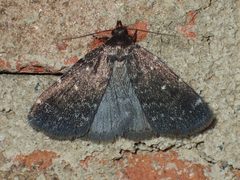
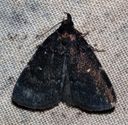
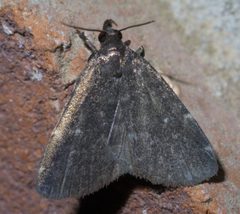
Idia julia is a small litter moth in the Erebidae, first described by William Barnes and James Halliday McDunnough in 1918. The is distributed across eastern North America, ranging from southern Canada to Georgia and Texas. have a wingspan of approximately 17 mm. Larvae feed on detritus, particularly dead leaves.
Pronunciation
How to pronounce Idia julia: /ˈɪdi.a ˈdʒuːli.a/
These audio files are automatically generated. While they are not always 100% accurate, they are a good starting point.
Identification
The small wingspan of about 17 mm distinguishes Idia julia from many larger erebid . Accurate identification likely requires examination of genitalia or reference to regional identification keys, as visual separation from is not documented in available sources.
Images
Habitat
Associated with leaf litter environments, consistent with larval feeding habits on detritus and dead leaves.
Distribution
Eastern North America: southern Canada (Manitoba, Saskatchewan, Vermont) south through the United States to Georgia and Texas.
Seasonality
One per year in northern parts of the range; multiple generations in southern regions.
Diet
Larvae feed on detritus, specifically dead leaves.
Life Cycle
Complete with one annually in the north and multiple generations in the south. Specific details of , larval instars, , and are not documented.
Ecological Role
Larvae contribute to decomposition of leaf litter as .
Similar Taxa
- Other Idia species share similar size, associations, and general ; precise identification requires detailed examination.
More Details
Nomenclature
Originally described as Camptylochila julia before transfer to Idia.