
Lesmone
Hübner, 1818
owlet moths
Species Guides
6- Lesmone aenaria
- Lesmone detrahens(Detracted Owlet)
- Lesmone formularis
- Lesmone fufius
- Lesmone griseipennis(Gray-winged Owlet Moth)
- Lesmone hinna(Lifted Owlet)
Lesmone is a of owlet moths in the Erebidae, established by Jacob Hübner in 1818. The genus contains approximately 30 described distributed primarily across the Neotropical region, with some species extending into the southern United States. Several species have received , including the detracted (L. detrahens) and gray-winged owlet moth (L. griseipennis). The genus shows considerable diversity in South and Central America.
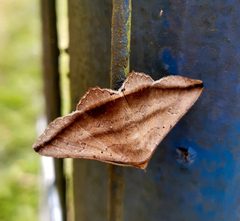
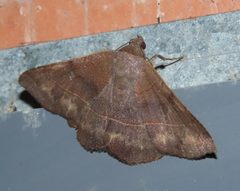
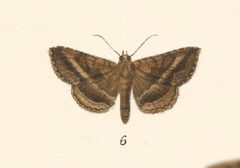
Pronunciation
How to pronounce Lesmone: /lɛsˈmoʊni/
These audio files are automatically generated. While they are not always 100% accurate, they are a good starting point.
Identification
Members of Lesmone can be distinguished from related erebid by combinations of wing pattern elements, though specific diagnostic characters vary by . The genus lacks comprehensive modern taxonomic revision, making identification to species level challenging without reference to original descriptions and . Some species exhibit grayish wing coloration with variable markings.
Images
Habitat
occur in diverse tropical and subtropical including lowland forests, coastal areas, and disturbed vegetation. Specific microhabitat preferences are poorly documented for most species.
Distribution
Primarily Neotropical, ranging from the southern United States (Texas, Florida, Arizona) through Mexico, Central America, and the Caribbean to South America (Brazil, French Guiana, Guyana, Suriname, Paraguay). Several are to islands including Jamaica, Puerto Rico, and Saint Thomas.
Behavior
are . Specific behavioral observations are sparse in published literature.
More Details
Taxonomic history
The was erected by Jacob Hübner in 1818 and has remained in Erebidae (formerly Noctuidae) throughout its taxonomic history. No comprehensive modern revision of the genus exists.
Species diversity
Approximately 30 are currently recognized, though the true diversity may be underestimated due to limited sampling in parts of the Neotropical range.