
Drasteria inepta
Edwards, 1881
Inept Drasteria, Inept Graphic
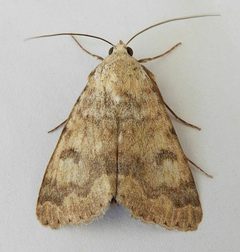
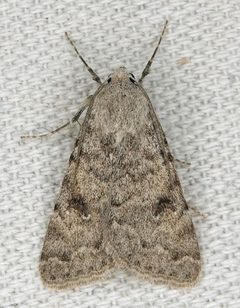
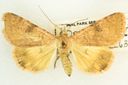
Pronunciation
How to pronounce Drasteria inepta: //dræsˈtɛri.ə ɪˈnɛptə//
These audio files are automatically generated. While they are not always 100% accurate, they are a good starting point.
Identification
Wingspan of 35–43 mm distinguishes it from larger and smaller Drasteria . The specific epithet 'inepta' (Latin for 'inept' or 'unsuitable') may refer to subtle or inconsistent pattern features that complicate identification. Confirmed records require examination of genitalia or comparison with .
Images
Habitat
Associated with cottonwood groves and wetland areas in prairie landscapes. The type of vegetation and moisture availability appear to influence local occurrence.
Distribution
Southwestern United States: from Arizona east to Texas, northward to Colorado and Utah.
Seasonality
on wing from April to August, with peak activity during summer months.
Behavior
are attracted to artificial light sources, including mercury vapor and blacklight setups. activity pattern typical of erebid .
Human Relevance
Documented during National Week events in Colorado, contributing to citizen science observations of regional moth diversity. No known economic or agricultural significance.
Similar Taxa
- Drasteria mirificaSimilar size range and geographic overlap in southwestern U.S.; both use startle defense with concealed hindwings