
Mocis disseverans
Walker, 1858
Yellow Mocis Moth
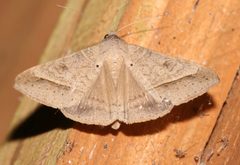
Mocis disseverans, commonly known as the Yellow Mocis , is a moth in the Erebidae. It occurs in the Caribbean and the southern United States, with documented in Florida, Texas, and Mississippi. The has a wingspan of approximately 40 mm. Like other members of the Mocis, it is likely associated with grassland and open .
Pronunciation
How to pronounce Mocis disseverans: /ˈmoʊ.sɪs dɪˈsɛv.əˌrænz/
These audio files are automatically generated. While they are not always 100% accurate, they are a good starting point.
Identification
The can be distinguished from similar Mocis species by geographic range and, where documented, subtle differences in wing pattern and coloration. The combination of yellowish ground color and southern U.S./Caribbean distribution helps separate it from in other regions. Definitive identification may require examination of genitalia or reference to original description.
Images
Appearance
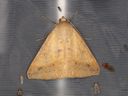
have a wingspan of approximately 40 mm (1.6 in). The 'Yellow Mocis ' suggests yellowish coloration, though specific pattern details are not well documented in available sources.
Habitat
Open in subtropical and tropical regions, including grasslands and areas with herbaceous vegetation. Specific microhabitat preferences are not well documented.
Distribution
Caribbean islands and southern United States, specifically documented from Florida, Texas, and Mississippi. The GBIF record indicates presence in Pará, Brazil (BR-PA), suggesting a broader Neotropical distribution than commonly cited.
Similar Taxa
- Mocis latipesSimilar size and preferences; occurs in overlapping range in southeastern United States. Mocis latipes typically shows more distinct transverse lines on the forewing.
- Mocis marcidaAnother with yellowish coloration; differentiation requires careful examination of wing pattern details and male genitalia.
More Details
Taxonomic History
Originally described as Remigia disseverans by Francis Walker in 1858, later transferred to the Mocis. The basionym Remigia disseverans is retained as a synonym.
Observation Data
The has accumulated 1,581 observations on iNaturalist, indicating it is moderately well documented by citizen scientists, though detailed biological studies appear limited.