
Mocis marcida
Guenée, 1852
Withered Mocis
Pronunciation
How to pronounce Mocis marcida: /ˈmoʊsɪs ˈmɑrsɪdə/
These audio files are automatically generated. While they are not always 100% accurate, they are a good starting point.
Identification
The can be distinguished from similar Mocis species by its documented geographic range and period. Specific diagnostic morphological features are not described in available sources.
Images
Appearance
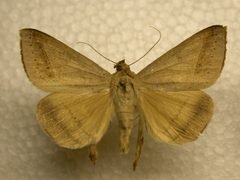
have a wingspan of approximately 47 mm (1.9 in). Specific wing pattern details are not documented in available sources.
Habitat
Grassland and open supporting larval grasses. The is associated with coastal and inland areas of the southeastern United States.
Distribution
Southeastern United States: from coastal North Carolina south to Florida, west to Texas. Rarely recorded as far north as New York.
Seasonality
are active from April to November in most of the range; year-round activity occurs in southern Florida and Texas. Multiple per year.
Diet
Larvae feed on various grasses (Poaceae). feeding habits are not documented.
Host Associations
- Poaceae - larval food plantvarious grass
Life Cycle
Multiple per year. Detailed stages are not documented in available sources.
Ecological Role
Larval herbivore on grasses; specific ecological impacts are not documented.
Similar Taxa
- Other Mocis speciescongeneric with similar general appearance; specific distinguishing features require expert examination
More Details
Taxonomic history
Originally described as Remigia marcida by Guenée in 1852; later transferred to Mocis.