Catocala ultronia
Hübner, 1823
Ultronia Underwing, Dark Red Underwing
Catocala ultronia is a medium-sized underwing in the Erebidae, first described by Jacob Hübner in 1823. It is characterized by cryptic forewings that conceal brightly colored hindwings, a trait shared with other members of the Catocala. The occurs across eastern North America and southern Canada, with larvae feeding on a documented range of woody plants including ash, apple, poplar, cherry, and basswood. are active in August and do not typically come directly to lights, instead remaining on the periphery of illuminated areas.
Pronunciation
How to pronounce Catocala ultronia: /kæˈtoʊkələ ʌlˈtroʊniə/
These audio files are automatically generated. While they are not always 100% accurate, they are a good starting point.
Identification
Distinguished from other Catocala by dark red hindwing coloration with black bands. Forewing pattern and hindwing color combination separate it from similar underwings. Specific identification may require examination of genitalia due to variation within the .
Images
Appearance
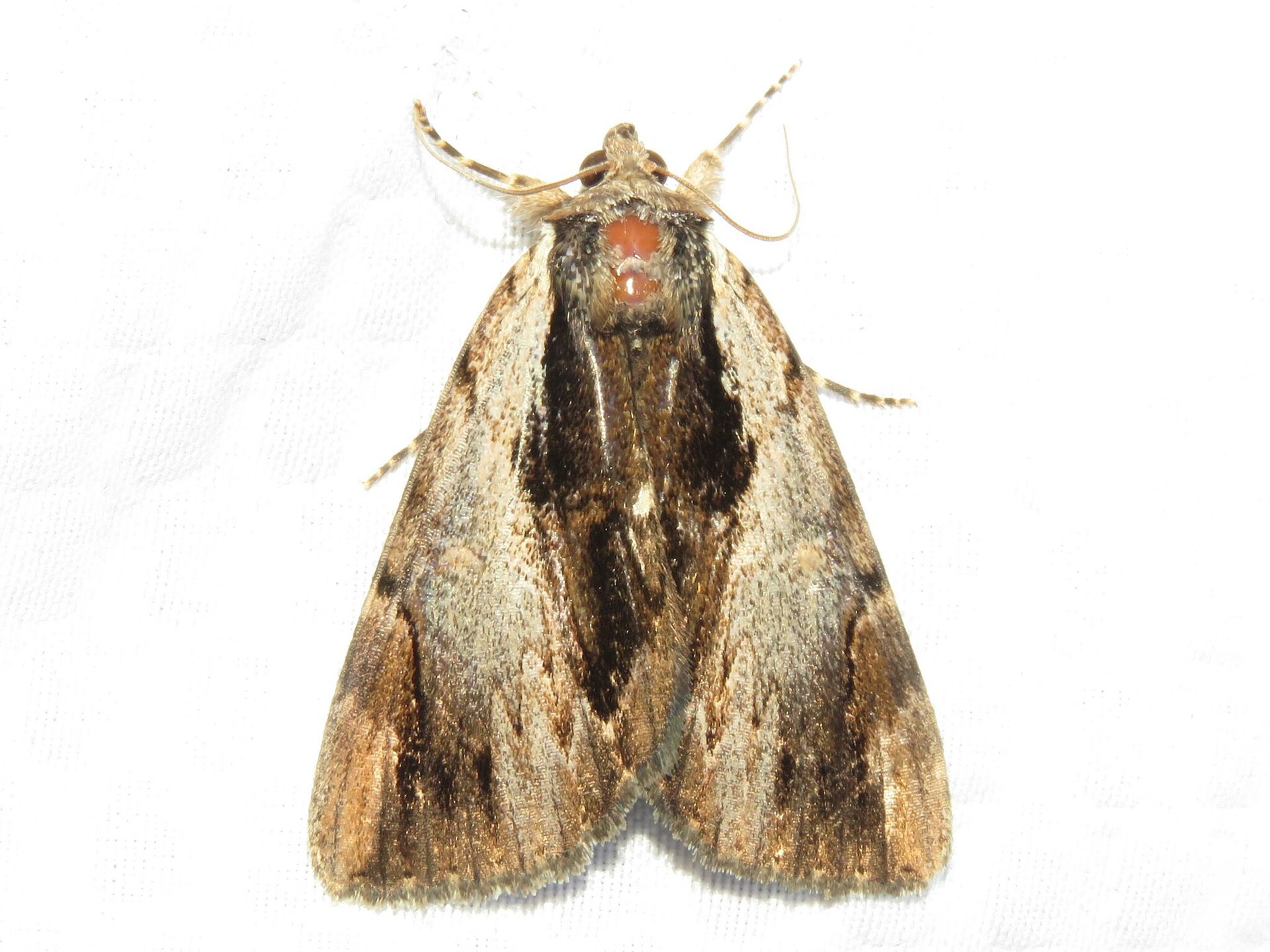
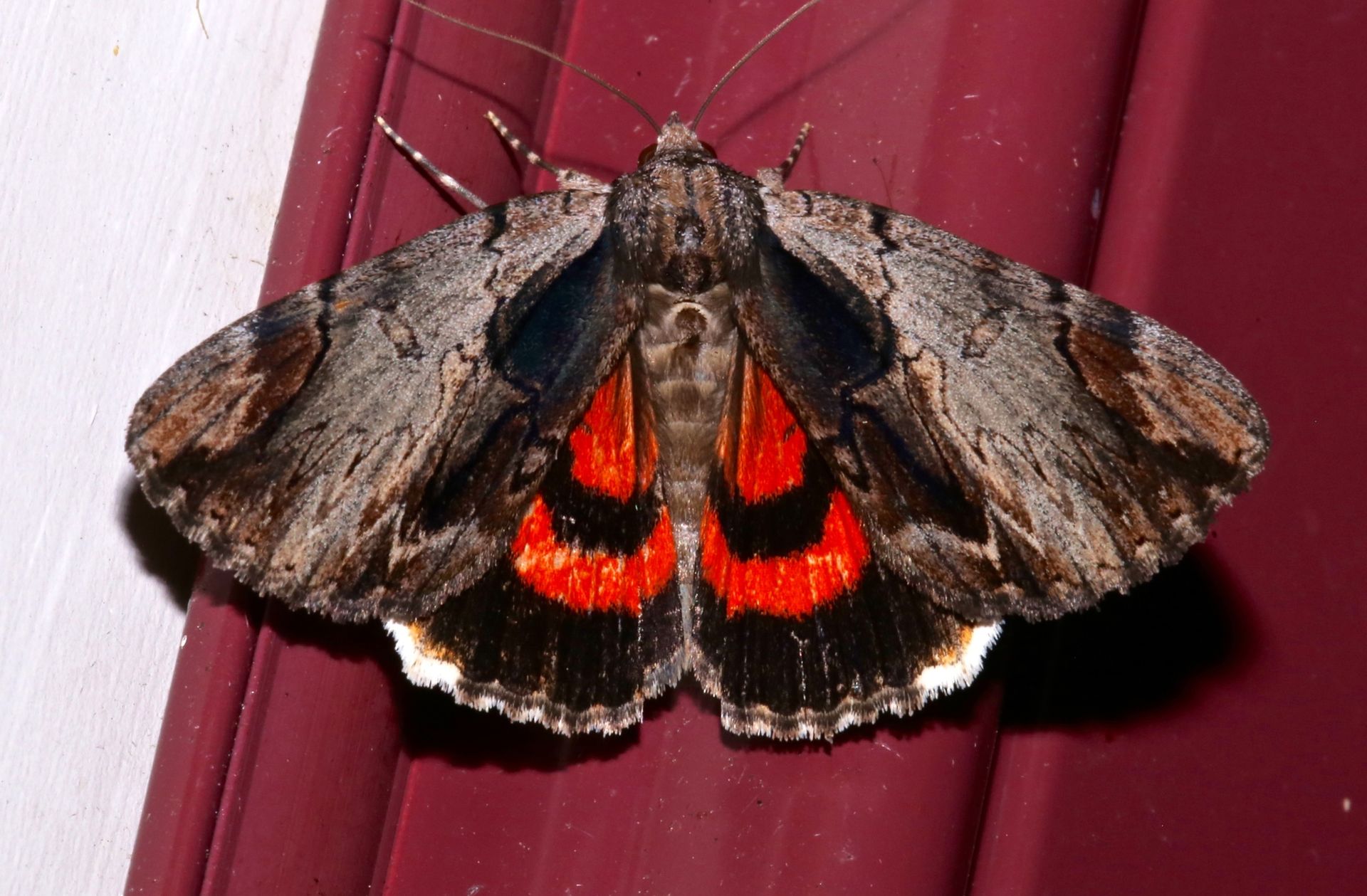
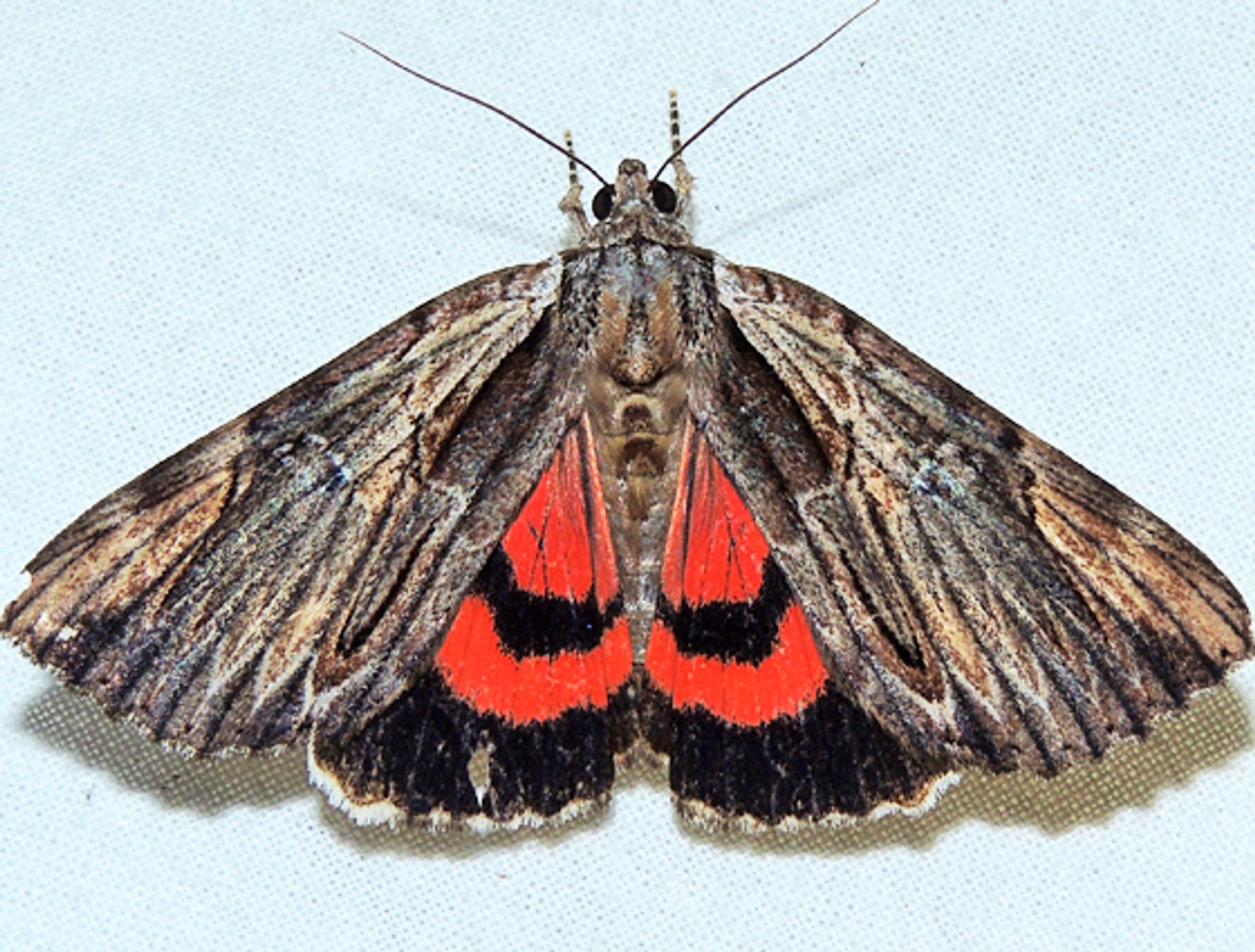
Wingspan 46–60 mm. Forewings dull gray-brown with complex patterning providing bark-like camouflage. Hindwings dark red to reddish-orange with black bands and white fringe, concealed at rest. Body robust, typical of underwing moths.
Distribution
Eastern North America from southern Canada to Florida and Texas. Westward across southern Canada to extreme southeast British Columbia. Present in Alberta, Manitoba, and Saskatchewan.
Seasonality
active in August; single per year depending on location.
Diet
Larvae feed on Fraxinus pennsylvanica (green ash), Malus (apple), Populus grandidentata (bigtooth aspen), Prunus pensylvanica (pin cherry), Prunus serotina (black cherry), Prunus virginiana (chokecherry), and Tilia americana (American basswood).
Life Cycle
Single per year. Larval stage feeds on specified plants; details not documented in sources. in August.
Behavior
Normally does not come directly to lights; remains on periphery of lighted areas when attracted. Can be flushed from daytime resting sites on tree trunks. Hindwings exposed when disturbed, likely serving as startle display against .
Ecological Role
Larval herbivore on deciduous trees and shrubs. role in not documented.
Similar Taxa
- Other Catocala speciesShare cryptic forewings and colorful hindwings; distinguished by specific hindwing color pattern and forewing markings
- Catocala epioneAnother underwing with different hindwing coloration; both attracted to lights peripherally in forested
Sources and further reading
- BugGuide
- Wikipedia
- GBIF taxonomy match
- iNaturalist taxon
- NCBI Taxonomy
- Catalogue of Life
- A Gathering of Lepidopterists: Who's Who of the Butterfly, Moth Experts | Bug Squad
- Got Moths? Celebrate National Moth Week and Global Citizen Science
- Bug Eric: National Moth Week Recap, 2015
- Bug Eric: National Moth Week Recap for Colorado Springs
- Bug Eric: National Moth Week 2024 Recap from Kansas City
- Bug Eric: New Mexico Night Bugs