
Catocala piatrix dionyza
Edwards, 1885
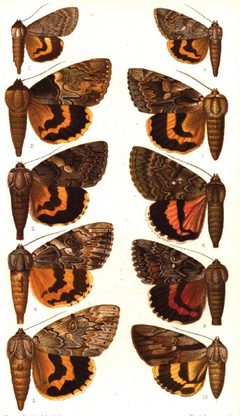
Catocala piatrix dionyza is a of underwing in the Erebidae. Like other members of the Catocala, it possesses cryptic forewings that conceal brightly patterned hindwings when at rest. The underwing moths are among the most visually striking of North American moths, with the genus name Catocala translating to "beautiful below." This subspecies was described by Edwards in 1885 and is part of the larger C. piatrix .
Pronunciation
How to pronounce Catocala piatrix dionyza: /kæˈtɒkələ paɪˈætrɪks daɪˈɒnɪzə/
These audio files are automatically generated. While they are not always 100% accurate, they are a good starting point.
Identification
Identification to level requires examination of specific morphological characters that distinguish dionyza from other C. piatrix subspecies. The sources do not provide diagnostic features for this subspecies. General Catocala identification relies on hindwing color pattern and forewing markings; -level and subspecies-level determinations often require reference to specialized keys or genitalia dissection.
Images
Appearance
As a of Catocala piatrix, this likely shares the general underwing : forewings colored in shades of gray, brown, or black with intricate patterns that provide camouflage against tree bark. When wings are spread, the hindwings reveal bold coloration—typically orange, red, or yellow with dark bands or markings. The specific distinguishing features of the dionyza subspecies relative to the nominate form are not documented in the provided sources.
Distribution
North America; records include Vermont, United States. The distribution of this relative to other C. piatrix subspecies is not detailed in the provided sources.
Behavior
As with other Catocala , are and typically do not come directly to lights, instead remaining on the periphery of illuminated areas or being found by searching tree trunks. They may be flushed from daytime resting positions on bark.
Similar Taxa
- Catocala piatrix piatrixNominate of the same ; distinguishing dionyza requires examination of subtle morphological differences not specified in available sources.
- Other Catocala speciesMany underwing moths share similar cryptic forewing patterns; accurate identification requires attention to hindwing coloration, geographic range, and often genitalic characters.
More Details
Taxonomic note
This is accepted in major taxonomic databases including GBIF, Catalogue of Life, and NCBI, though with slight variation in authorship year (1884 vs. 1885). It has been recorded in iNaturalist with 18 observations as of the source date.
Sources and further reading
- BugGuide
- GBIF taxonomy match
- iNaturalist taxon
- NCBI Taxonomy
- Catalogue of Life
- A Gathering of Lepidopterists: Who's Who of the Butterfly, Moth Experts | Bug Squad
- Got Moths? Celebrate National Moth Week and Global Citizen Science
- Bug Eric: National Moth Week Recap, 2015
- Bug Eric: National Moth Week Recap for Colorado Springs
- Bug Eric: National Moth Week 2024 Recap from Kansas City
- Bug Eric: New Mexico Night Bugs