
Catocala mira
Grote, 1876
Wonderful Underwing
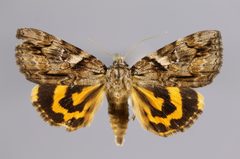
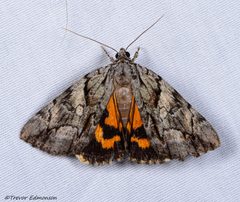
Catocala mira, known as the Wonderful Underwing, is a in the Erebidae described by Augustus Radcliffe Grote in 1876. The name derives from Latin mira, meaning "wonderful." It is a medium-sized underwing moth with distinctive gray forewings featuring a lighter diagonal band and orange hindwings with irregular black banding. The species occurs across eastern and central North America and has been recorded feeding on hawthorns (Crataegus) in the larval stage.
Pronunciation
How to pronounce Catocala mira: /ˈkætəˌkɑːlə ˈmɪrə/
These audio files are automatically generated. While they are not always 100% accurate, they are a good starting point.
Identification
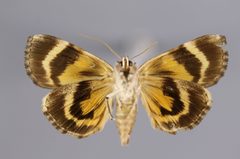
The combination of gray forewings with a distinct lighter diagonal band and orange hindwings with irregular-edged black bands distinguishes this from other Catocala. The checkered fringe on the hindwing margins is a notable feature. Forewing pattern separates it from similar underwings with plainer or differently banded forewings; hindwing band irregularity differs from species with smoother black banding.
Images
Habitat
Associated with hawthorn (Crataegus) plants. Specific preferences for not documented in available sources.
Distribution
North America: Manitoba through southern Ontario and Quebec, south through New Hampshire and Connecticut to Florida, west to Texas, and north through Iowa and Illinois. GBIF records confirm presence in Manitoba (Canada) and Vermont (USA).
Seasonality
active July to August. Probably one per year.
Diet
Larvae feed on Crataegus (hawthorn). diet not documented.
Host Associations
- Crataegus - larval food planthawthorn
Life Cycle
Probably (one per year). Specific details of , larval, and pupal stages not documented in available sources.
Behavior
are and attracted to light. Like other underwing moths, presumably rests with forewings covering the brightly colored hindwings, flashing them when disturbed as a startle defense.
Ecological Role
Larval herbivore on hawthorn. Presumably serves as prey for including birds, bats, and arthropods. role as not documented.
Human Relevance
Subject of citizen science observation during National Week and similar events. No documented economic or agricultural significance.
Similar Taxa
- Catocala epioneBoth are orange-hindwinged underwings, but C. epione has different forewing pattern and hindwing banding structure
- Other Catocala speciesOver 250 in share concealed colorful hindwings; forewing pattern and hindwing band details distinguish C. mira
More Details
Etymology
epithet mira is Latin for "wonderful," directly referenced in the .
Sources and further reading
- BugGuide
- Wikipedia
- GBIF taxonomy match
- iNaturalist taxon
- NCBI Taxonomy
- Catalogue of Life
- A Gathering of Lepidopterists: Who's Who of the Butterfly, Moth Experts | Bug Squad
- UBI Professor Demonstrates 'How to Draw a Bug' at Bohart Museum Open House | Bug Squad
- Got Moths? Celebrate National Moth Week and Global Citizen Science
- Bug Eric: National Moth Week 2024 Recap from Kansas City
- Bug Eric: National Moth Week Recap, 2015
- Bug Eric: National Moth Week Recap for Colorado Springs