
Catocala gracilis
W.H. Edwards, 1864
Graceful Underwing
Pronunciation
How to pronounce Catocala gracilis: /kəˈtoʊkələ ˈɡræˌsɪlɪs/
These audio files are automatically generated. While they are not always 100% accurate, they are a good starting point.
Identification
Distinguished from other Catocala by specific forewing pattern elements and hindwing coloration; precise diagnostic features require reference to specialized underwing keys. The species name 'gracilis' (slender/graceful) may reflect relatively slender build compared to . Forewing pattern and hindwing banding distinguish it from similar eastern North American underwings.
Images
Appearance
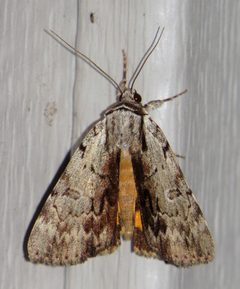
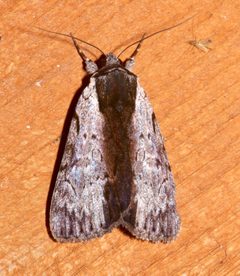
Wingspan 40–45 mm. Forewings are cryptically colored, typically gray-brown with intricate patterning that provides camouflage against tree bark when at rest. Hindwings are concealed at rest but display bold coloration when exposed—characteristic of underwing moths in Catocala.
Habitat
Associated with woodland and forest edge where larval plants (Leucothoe, Vaccinium pallidum, Quercus) occur. Specific microhabitat preferences not documented.
Distribution
Eastern North America: Manitoba to Nova Scotia and Maine, south through Connecticut and New Jersey to Florida, west to Mississippi and Missouri. Records include Vermont.
Seasonality
active July to September depending on location. One per year ().
Diet
Larvae feed on Leucothoe, Vaccinium pallidum, and possibly Quercus. feeding habits not documented.
Host Associations
- Leucothoe - larval
- Vaccinium pallidum - larval
- Quercus - possible larval documented as 'possibly' in source
Life Cycle
One per year. stage not specified in available sources. Complete : , larva, pupa, .
Behavior
are and attracted to light. At rest, forewings are held together over the back, concealing the brightly colored hindwings—a posture characteristic of underwing moths. This provides protection against .
Ecological Role
Larvae function as herbivores on ericaceous shrubs and possibly oaks. may serve as prey for and as potential , though specific ecological roles are poorly documented.
Human Relevance
Subject of interest to lepidopterists and enthusiasts. Featured in National Moth Week events and citizen science projects. No documented economic importance or pest status.
Similar Taxa
- Other Catocala speciesAll underwing moths share the characteristic concealed colorful hindwings and cryptic forewings. C. gracilis distinguished by specific forewing pattern, size, and geographic range.
- Catocala amestrisAnother underwing with overlapping range in some areas; distinguished by specific forewing markings and hindwing pattern.
More Details
Sources and further reading
- BugGuide
- Wikipedia
- GBIF taxonomy match
- iNaturalist taxon
- NCBI Taxonomy
- Catalogue of Life
- A Gathering of Lepidopterists: Who's Who of the Butterfly, Moth Experts | Bug Squad
- Grasshopper Collections and Survey
- Traffic Jam Treehoppers | Beetles In The Bush
- Bichos Argentinos #2 – Pseudomyrmex sp. | Beetles In The Bush
- Got Moths? Celebrate National Moth Week and Global Citizen Science
- Bug Eric: National Moth Week Recap, 2015