
Catocala agrippina
Strecker, 1874
Agrippina Underwing
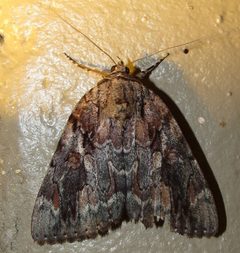
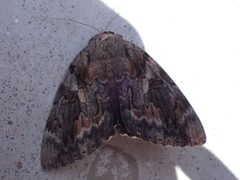
Catocala agrippina, commonly known as the Agrippina Underwing, is a in the Erebidae first described by Herman Strecker in 1874. The is found in the eastern and south-central United States, ranging from southern New Jersey to Florida, west to Texas and eastern Oklahoma, and north to southern Indiana. are active from June to August and have a wingspan of 75–85 mm. The larvae feed exclusively on bitternut hickory (Carya cordiformis).
Pronunciation
How to pronounce Catocala agrippina: //kəˈtɒkələ ˌæɡrɪˈpaɪnə//
These audio files are automatically generated. While they are not always 100% accurate, they are a good starting point.
Identification
Distinguished from other Catocala by geographic range and larval association with Carya cordiformis. Specific hindwing coloration and pattern details required for definitive identification are not provided in available sources. Identification to species level in this typically requires examination of hindwing pattern, genitalia, or knowledge of local fauna and host plants.
Images
Appearance
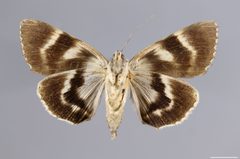
have a wingspan of 75–85 mm (3.0–3.3 in). Like other underwing moths, the forewings are cryptically colored in dull gray or brown tones that provide camouflage when at rest. The hindwings, concealed beneath the forewings at rest, display bold and colorful patterns typical of the Catocala. The specific coloration and pattern details of the hindwings for this are not described in available sources.
Habitat
Associated with containing bitternut hickory (Carya cordiformis), its larval plant. This includes deciduous forests and woodlands in the eastern and south-central United States where this tree occurs.
Distribution
United States: southern New Jersey south to Florida, west to Texas and eastern Oklahoma, and north to southern Indiana.
Seasonality
are on wing from June to August, with exact timing depending on location.
Diet
Larvae feed on Carya cordiformis (bitternut hickory). feeding habits are not documented in available sources.
Host Associations
- Carya cordiformis - larval bitternut hickory; sole documented plant
Behavior
are . Like other underwing moths, they rest with forewings folded over the body, concealing the brightly colored hindwings. When disturbed, they flash the hindwings, which may serve as a startle display against .
Ecological Role
Larval herbivore on bitternut hickory. Specific ecological roles in pollination or as prey are not documented in available sources.
Similar Taxa
- Other Catocala speciesMany underwing moths share similar cryptic forewing coloration and require examination of hindwing patterns, genitalia, or geographic range for differentiation.
More Details
Taxonomic History
First described by Herman Strecker in 1874. The name Catocala is derived from Greek meaning 'beautiful below', referring to the colorful hindwings concealed beneath the cryptic forewings.
Etymology
The specific epithet 'agrippina' likely references Agrippina, a prominent name in Roman history, though the exact reason for Strecker's choice is not documented in available sources.
Sources and further reading
- BugGuide
- Wikipedia
- GBIF taxonomy match
- iNaturalist taxon
- NCBI Taxonomy
- Catalogue of Life
- A Gathering of Lepidopterists: Who's Who of the Butterfly, Moth Experts | Bug Squad
- How Many Species of Moths at Bohart Museum's Moth Night? | Bug Squad
- What a Night for Moths and Spectators! | Bug Squad
- The Monarchs at the Bohart Museum of Entomology | Bug Squad
- Got Moths? Celebrate National Moth Week and Global Citizen Science
- Bug Eric: National Moth Week Recap, 2015