
Janseodes melanospila
Guenée, 1852
Janseodes melanospila is the sole in the Janseodes. It is a with a notably wide geographic range spanning three continents: Asia, Africa, and North America. The species was first described from India in 1852 and has since been recorded in South Africa and Florida, USA. Its disjunct distribution pattern suggests possible human-mediated introduction to some regions, though natural mechanisms remain unclear.
Pronunciation
How to pronounce Janseodes melanospila: //ˌdʒæn.siˈoʊdiːz ˌmɛləˈnɒspɪlə//
These audio files are automatically generated. While they are not always 100% accurate, they are a good starting point.
Identification
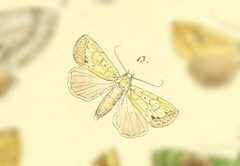
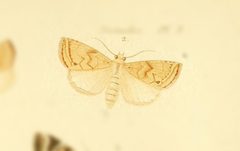
The Janseodes is , so specimens identified to genus level are this . Specific diagnostic features for field identification are not well documented in available sources. The specific epithet 'melanospila' (Greek: 'black spot') may refer to a distinctive dark marking on the wings, though this requires verification from or original description.
Images
Distribution
Native or established in India (type locality), South Africa, and the US state of Florida. GBIF records indicate additional presence in Democratic Republic of Congo (Bas Congo), Republic of Congo, Côte d'Ivoire, and Cape Verde (Santiago). The Florida and Cape Verde likely represent introduced or vagrant occurrences given the geographic isolation from core African/Asian range.
Misconceptions
More Details
Taxonomic History
Originally described as Euperia melanospila by Guenée in 1852. Transferred to the new Janseodes by Pierre Viette in 1967, making it the type and only of that genus.
Disjunct Distribution
The combination of Indian, African, and Floridian records is unusual for a and warrants further study to determine whether this represents natural range, human introduction, or cryptic .