
Isogona tenuis
Grote, 1872
Thin-lined Owlet
Isogona tenuis, commonly known as the Thin-lined Owlet, is a in the Erebidae. First described by Augustus Radcliffe Grote in 1872, this species ranges across eastern North America from Ontario south to Florida and Texas. are active from spring through late summer, with timing varying by latitude. The larvae feed exclusively on Celtis (hackberry) species.
Pronunciation
How to pronounce Isogona tenuis: /ˈisəˌɡoʊnə ˈtɛnjuɪs/
These audio files are automatically generated. While they are not always 100% accurate, they are a good starting point.
Identification
The can be distinguished from similar Isogona species by its specific wing pattern markings, particularly the thin lines referenced in its . Accurate identification typically requires examination of genitalia or comparison with reference specimens. It may be confused with other small erebid in the Calpinae , but its association with Celtis plants and its documented range can aid in differentiation.
Images
Appearance
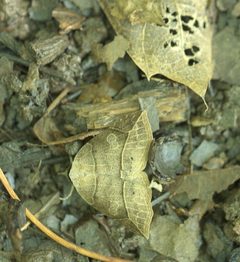
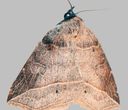
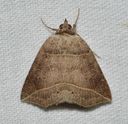
have a wingspan of 28–30 mm. The "Thin-lined Owlet" refers to characteristic narrow lines on the wings, though specific pattern details are not well-documented in available sources. As a member of Calpinae, it likely shares the general owlet moth body plan with relatively broad, rounded forewings and a compact body.
Habitat
Associated with where Celtis (hackberry) occur, including deciduous woodlands, forest edges, and riparian areas. The distribution across a broad latitudinal range suggests adaptability to varied eastern North American forest and woodland conditions.
Distribution
Eastern North America from Ontario, Wisconsin, Ohio, and New Jersey southward to Florida and Texas. The occupies a broad latitudinal range across the eastern and central United States and adjacent Canada.
Seasonality
are on wing from May to August in northern parts of the range, and from April to October in southern regions. This extended period in the south likely reflects multiple or prolonged .
Diet
Larvae feed on Celtis (hackberries). feeding habits are not documented in available sources.
Host Associations
- Celtis - larval food plantLarvae feed on hackberry ; specific Celtis species not distinguished in available sources
Life Cycle
Complete with , larva, pupa, and stages. Larvae are known to feed on Celtis . Specific details regarding site, stage, and number of per year are not documented in available sources.
Behavior
are and attracted to light. Specific behavioral details beyond period and larval feeding are not documented.
Ecological Role
Larvae function as herbivores on Celtis , contributing to nutrient cycling in woodland . The species serves as prey for various including birds, bats, and other , though specific predator relationships are not documented.
Human Relevance
No significant documented economic or cultural importance. Not known to be a pest . The species may serve as an indicator of healthy Celtis-associated woodland .
Similar Taxa
- Other Isogona speciesSimilar size, wing shape, and general appearance; require detailed examination of wing patterns and genitalia for definitive identification
- Other Calpinae mothsShared characteristics including body form and wing shape; Isogona tenuis distinguished by specific wing line patterns and geographic range
More Details
Taxonomic history
Originally described as Eutoreuma tenuis by Grote in 1872, later transferred to Isogona.