
Hormoschista latipalpis
Walker, 1858
Double-lined Brown Moth
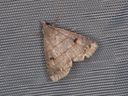
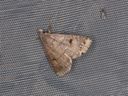
Hormoschista latipalpis, commonly known as the Double-lined Brown Moth, is the sole in its Hormoschista. First described by Francis Walker in 1858, this belongs to the Erebidae (formerly placed in Noctuidae). It is distributed across eastern North America and the Caribbean. The species is and attracted to light.
Pronunciation
How to pronounce Hormoschista latipalpis: /hɔr.moʊˈskɪs.tə ˌlætɪˈpæl.pɪs/
These audio files are automatically generated. While they are not always 100% accurate, they are a good starting point.
Identification
The "double-lined brown moth" refers to two dark longitudinal lines on the forewings, a key distinguishing feature. The has broad palps (reflected in the specific epithet 'latipalpis', meaning 'wide palps'), which may be visible upon close examination. Overall coloration is brown with subtle patterning. Separation from other brown erebid requires examination of genitalia or reference to the double line pattern and palp structure.
Images
Distribution
Eastern North America and the Caribbean.
Behavior
are and attracted to artificial light sources. activity has been recorded during warmer months.
Human Relevance
Occasionally encountered at porch lights and in surveys. No significant economic or agricultural impact documented.
Similar Taxa
- Other brown Erebidae/Noctuidae mothsMany brown with longitudinal lines occur in the same range; H. latipalpis is distinguished by the combination of two prominent dark lines and broad labial palps.
More Details
Taxonomic Note
placement has varied: treated as Noctuidae in older literature (including Catalogue of Life) but now classified in Erebidae based on molecular and morphological studies. The Hormoschista remains .
Basionym
Originally described as Hydrelia latipalpis Walker, 1858 before transfer to Hormoschista.