
Eublemma minima
(Guenée, 1852)
everlasting bud moth
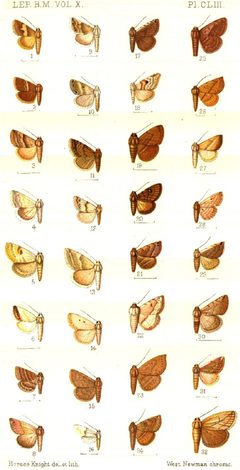
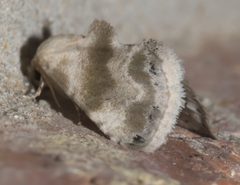
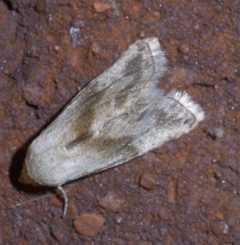
Eublemma minima, the everlasting bud , is a small moth in the Erebidae, first described by Achille Guenée in 1852. The species has an unusually broad geographic distribution spanning Africa (Kenya, Madagascar, South Africa, Yemen) and the Americas (United States, Brazil, Argentina, Caribbean, Paraguay), suggesting either natural capabilities or human-mediated introduction to the Western Hemisphere. The specific epithet 'minima' refers to its small size relative to .
Pronunciation
How to pronounce Eublemma minima: /juːˈblɛmə ˈmɪnɪmə/
These audio files are automatically generated. While they are not always 100% accurate, they are a good starting point.
Identification
As a member of the Eublemma, this can be recognized by the characteristic features of the group: small to medium size, relatively narrow forewings with somewhat pointed apices, and generally pale to moderately colored wing patterns. Definitive identification to species level requires examination of genitalic structures and comparison with , as external among Eublemma species can be subtle and overlapping.
Images
Distribution
Native to eastern and southern Africa (Kenya, Madagascar, South Africa, Yemen) and widely distributed in the Americas (United States, Brazil, Argentina, Caribbean islands, Paraguay). The disjunct distribution pattern suggests possible anthropogenic introduction to the New World, though the mechanism and timing remain undocumented.
Host Associations
- Pseudognaphalium obtusifolium - Larval plant; commonly known as rabbit tobacco or sweet everlasting, a native North American in the Asteraceae
Similar Taxa
- Other Eublemma speciesExternal is highly similar among ; reliable separation requires dissection and examination of male genitalia and female signum structures
More Details
Nomenclatural history
Originally described as Micra minima by Guenée in 1852, later transferred to the Eublemma. The basionym Micra minima reflects historical classification within a now-suppressed genus concept.
Biogeographic significance
The trans-Atlantic distribution of E. minima is atypical for a small and warrants further study to determine whether represent a single widespread or cryptic , and whether New World populations resulted from natural or human introduction.
Sources and further reading
- BugGuide
- Wikipedia
- GBIF taxonomy match
- iNaturalist taxon
- NCBI Taxonomy
- Catalogue of Life
- Do Common Methods for Protecting Bees From Pesticides Actually Work?
- Boric Acid Kills Bed Bugs, But Only When They Eat It
- After Emerald Ash Borer, Invertebrates on the Ground Get to Work
- Pseudoxycheila tarsalis – remounted | Beetles In The Bush
- Oedemeridae | Beetles In The Bush