
Crambidia cephalica
(Grote & Robinson, 1870)
Yellow-headed Lichen Moth
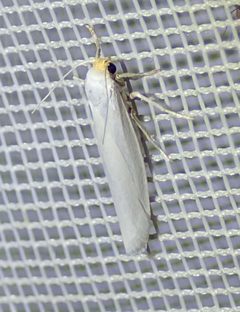
Crambidia cephalica, the yellow-headed lichen , is a small erebid moth described by Grote and Robinson in 1870. It is known from the central and southern United States, where it inhabits steppes and open forests. are active from March through September and produce multiple per year. The has a documented forewing length of 9–15 mm.
Pronunciation
How to pronounce Crambidia cephalica: /kræmˈbɪdiə sɛˈfælɪkə/
These audio files are automatically generated. While they are not always 100% accurate, they are a good starting point.
Identification
The yellow distinguishes this from , though specific comparative characters with other Crambidia species are not documented. Forewing length of 9–15 mm provides a size reference. Geographic range in the central and southern United States may help narrow identification possibilities.
Images
Appearance
Small with forewings measuring 9–15 mm in length. The references a yellow , though specific coloration details of the body and wings are not documented in available sources.
Habitat
Steppes and open forests. Specific vegetation associations or microhabitat preferences are not documented.
Distribution
Central and southern United States: from eastern Nevada, Utah, and Arizona eastward to southern Ohio, Tennessee, North Carolina, and northern Georgia. A single record from Alberta, Canada exists in GBIF, though this may represent a vagrant or misidentification given the core range description.
Seasonality
active March through September. Multiple per year occur.
Life Cycle
Multiple per year. Specific details of , larval, or pupal stages are not documented.
Similar Taxa
- Other Crambidia species share general and preferences; C. cephalica distinguished by yellow coloration where documented.
More Details
Original Description
First described as Lithosia cephalica by Grote and Robinson in 1870, later transferred to Crambidia.