
Cisthene conjuncta
(Barnes & McDunnough, 1913)
White-streaked Lichen Moth
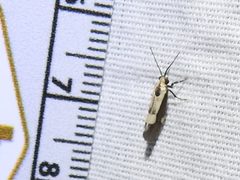
Cisthene conjuncta is a small lichen in the Erebidae, described by Barnes and McDunnough in 1913. It is restricted to southern Texas, where fly in March, July, and October. The has a wingspan of approximately 15 mm. As a member of the Cisthene, it belongs to a group of tiger moths known for acoustic aposematism, though specific behavioral studies have not been conducted on this particular species.
Pronunciation
How to pronounce Cisthene conjuncta: //sɪsˈθiːni kənˈdʒʌŋktə//
These audio files are automatically generated. While they are not always 100% accurate, they are a good starting point.
Identification
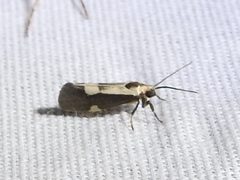
Distinguished from other Cisthene by geographic restriction to southern Texas combined with specific period (March, July, October). The small size (15 mm wingspan) and white streaking pattern separate it from larger or differently marked . Precise identification requires examination of genitalia or comparison with .
Images
Appearance
Small with wingspan approximately 15 mm. Specific coloration and pattern details are not documented in available sources, though the "white-streaked lichen moth" suggests pale longitudinal markings on the wings. As a member of Lithosiini (lichen moths), it likely exhibits muted, cryptic coloration typical of the tribe.
Habitat
Associated with lichen-rich environments in southern Texas, typical of Lithosiini whose larvae feed on lichens. Specific substrate preferences are undocumented.
Distribution
to southern Texas, United States. No records from other regions are confirmed.
Seasonality
active in March, July, and October. This trimodal pattern suggests possible multivoltine or extended periods, though specific voltinism is unconfirmed.
Ecological Role
likely serve as prey for insectivorous bats. As a member of the Cisthene, acoustic aposematism is a plausible defensive mechanism, though this has not been directly observed in C. conjuncta. Larval stages presumably contribute to lichen dynamics through grazing.
Human Relevance
No documented economic or medical significance. Occasionally encountered by collectors and photographers in southern Texas.
Similar Taxa
- Cisthene martiniCongeneric tiger moth with similar size and acoustic aposematism , but distinguished by different geographic distribution and specific wing pattern differences not detailed for C. conjuncta
- Other Cisthene speciesMultiple occur in North America; C. conjuncta separated by combination of small size, southern Texas , and documented
More Details
Taxonomic history
Originally described as Illice conjuncta before transfer to Cisthene. Basionym preserved in some databases.
Research context
While acoustic aposematism has been demonstrated in Cisthene martini, no field studies have specifically examined C. conjuncta. Behavioral inferences from related should be treated cautiously.