
Pygarctia murina
Stretch, 1885
Mouse-colored Euchaetes, mouse-colored euchaetias
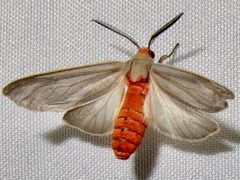
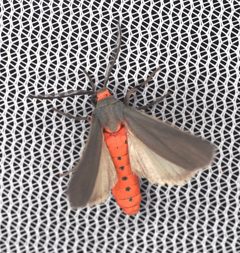
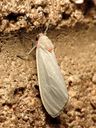
Pygarctia murina is a in the Erebidae, described by Richard Harper Stretch in 1885. It occurs in arid and semi-arid regions of the southwestern United States, including southern Colorado, south-western Utah, south-eastern California, and southern Texas. are active from late July through September, with larvae feeding on Euphorbia and Funastrum .
Pronunciation
How to pronounce Pygarctia murina: //paɪˈɡɑːrk.tiə ˈmjʊ.rɪ.nə//
These audio files are automatically generated. While they are not always 100% accurate, they are a good starting point.
Identification
The small wingspan (26–33 mm) and uniform mouse-gray coloration distinguish from more brightly patterned relatives in the Pygarctia. The period (late July to September) and restricted southwestern U.S. distribution provide additional diagnostic context. Larvae may be recognized by their association with Euphorbia plants.
Images
Habitat
Arid and semi-arid environments of the southwestern United States, including scrublands and desert margins where plants (Euphorbia and Funastrum ) occur.
Distribution
United States: south-western Utah, southern Colorado, south-eastern California, and southern Texas.
Seasonality
are on wing from late July to September.
Diet
Larvae feed on Euphorbia and have been successfully reared on Funastrum species. diet is not documented.
Host Associations
- Euphorbia - larval food plantPrimary
- Funastrum - larval food plantSecondary , used in rearing
Life Cycle
Complete with documented larval and pupal stages. Larvae grow to approximately 22 mm before pupating in silken cocoons within surface debris. occurs from late July through September.
Ecological Role
Larval herbivore on Euphorbia and Funastrum; specific ecological functions (pollination, , ) are not documented.
Similar Taxa
- Other Pygarctia speciesP. murina is distinguished by its smaller size, uniform mouse-gray coloration, and restricted southwestern distribution compared to more brightly patterned or larger .
More Details
Taxonomic history
Originally described as Euchaetes murina by Stretch in 1885; later transferred to Pygarctia. The basionym Euchaetes murina reflects its historical placement in a different within Arctiinae.
Conservation status
Not formally assessed; appears to be locally common within its restricted range based on iNaturalist observations (571 records as of source date).