Phoenicoprocta
Druce, 1898
Lydia tiger moth (for P. lydia)
Species Guides
2- Phoenicoprocta hampsonii
- Phoenicoprocta lydia(Lydia tiger moth)
Phoenicoprocta is a of tiger moths in the Erebidae, erected by Herbert Druce in 1898. The genus contains approximately 18 described distributed across the Caribbean, Central America, and parts of South America. One species, Phoenicoprocta capistrata, has been studied in detail regarding its and stages.
Pronunciation
How to pronounce Phoenicoprocta: //ˌfɛnɪkoʊˈprɒktə//
These audio files are automatically generated. While they are not always 100% accurate, they are a good starting point.
Identification
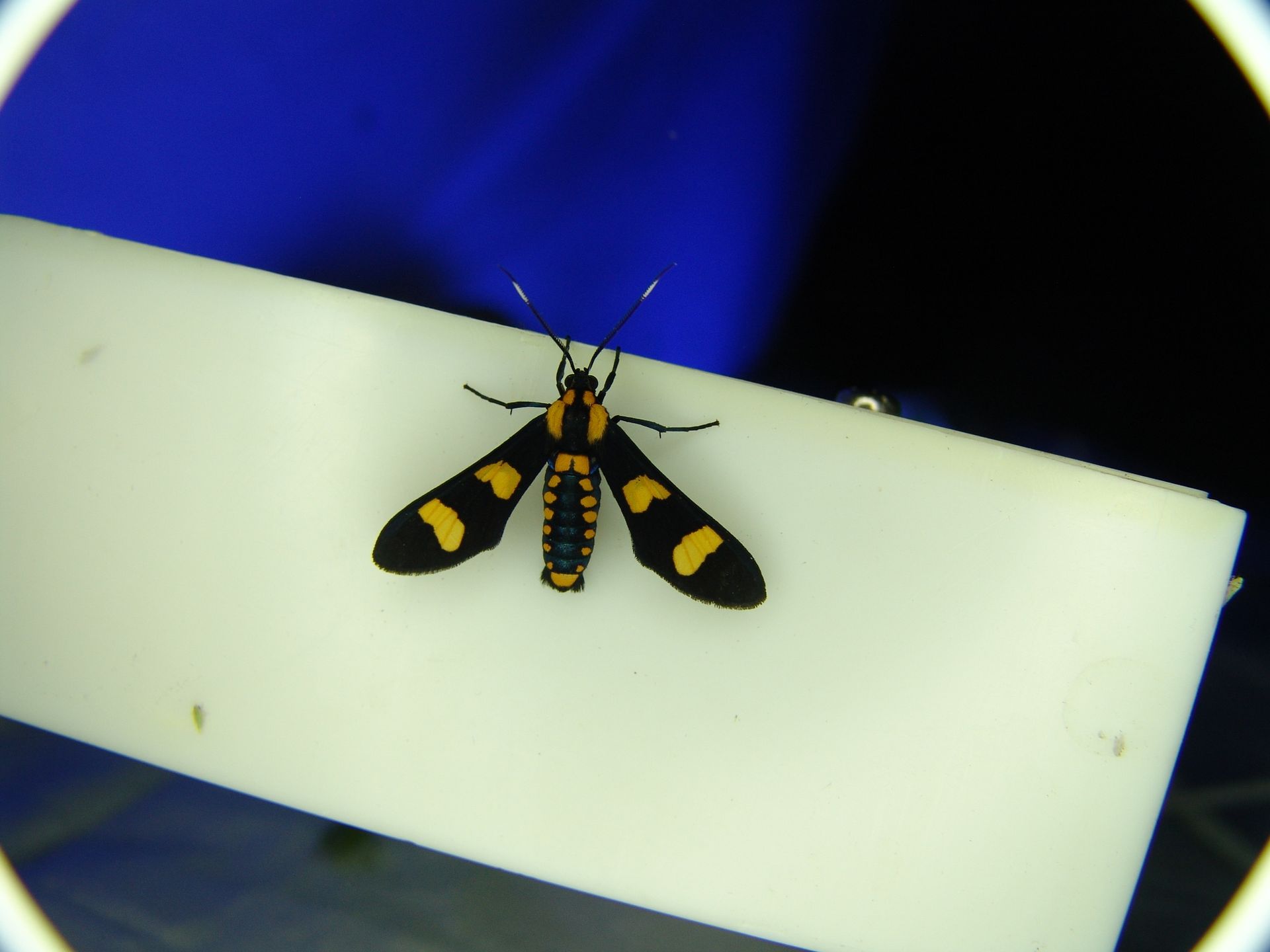
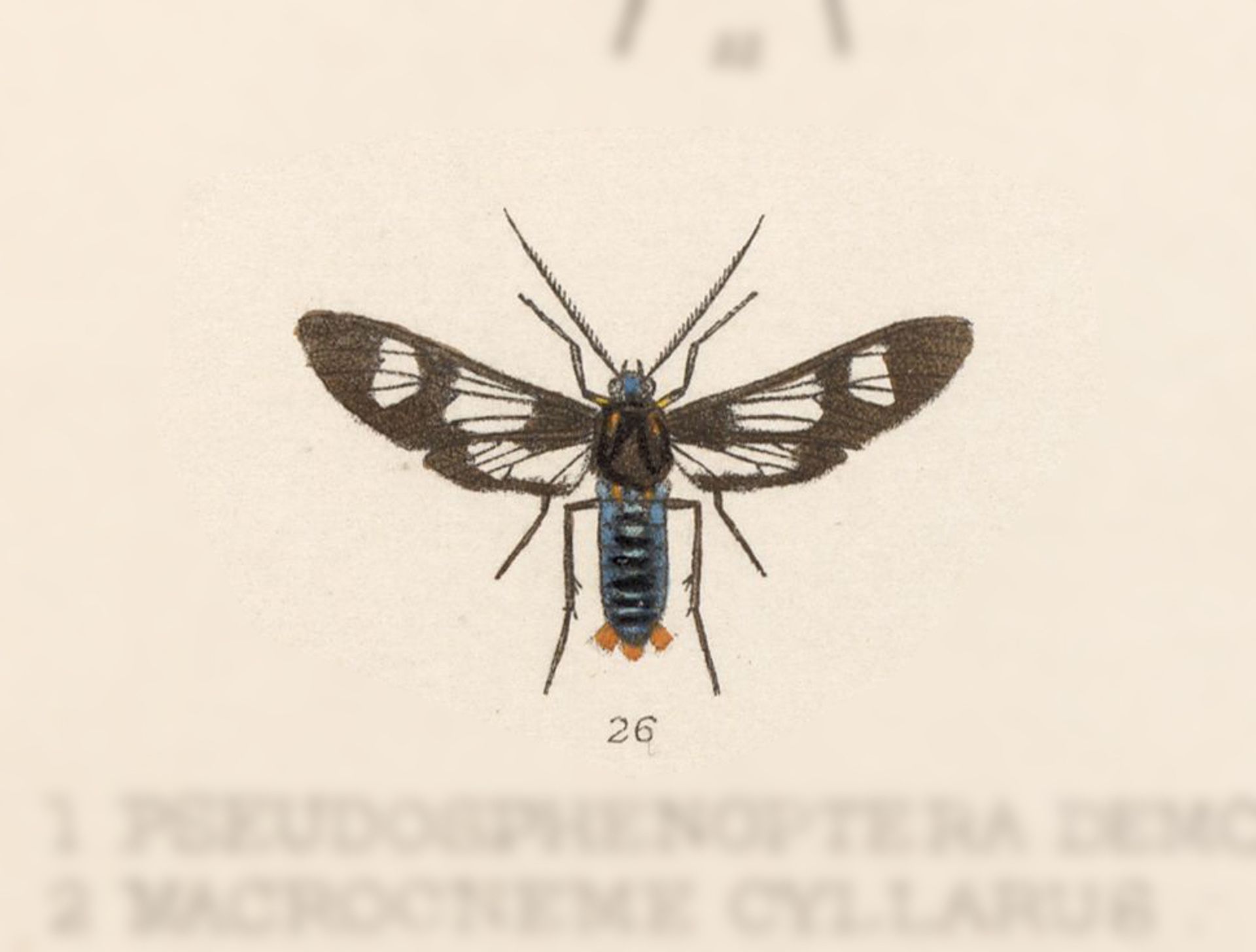
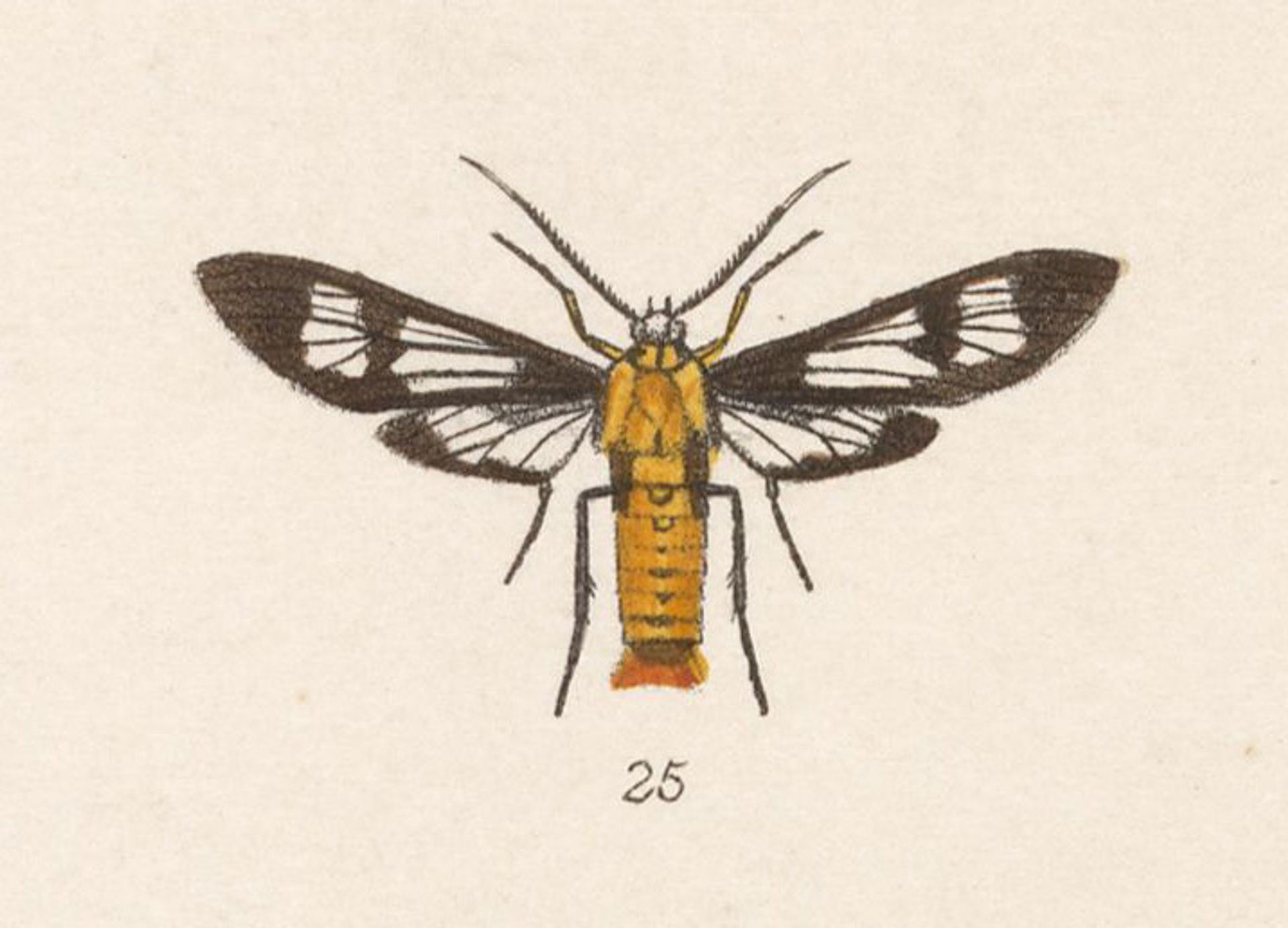
of Phoenicoprocta exhibit female-limited color in at least one species (P. capistrata), with orange-reddish and blue morphs documented. Larvae possess characteristic tiger moth features including setae that change type and coloration at each , with cephalic capsule growth following .
Images
Habitat
Field collection of P. capistrata in Cuba occurred at 22° 46′ latitude, -82° 32′ longitude in areas supporting its plant Serjania diversifolia, a Neotropical liana.
Distribution
Caribbean region (Cuba, St. Thomas, St. Croix, Puerto Rico, Bahamas, Jamaica, Virgin Islands, Haiti) and Brazil; distribution extends to Central America and Mexico based on records.
Diet
Larvae of P. capistrata feed on Serjania diversifolia (Sapindaceae). First instar larvae consume the of young fresh leaves; later instars feed on mature leaves but avoid .
Host Associations
- Serjania diversifolia - larval Sapindales: Sapindaceae; only confirmed for P. capistrata
Life Cycle
Complete documented for P. capistrata: (~6 days), larva (~36 days with 6-8 instars, most commonly 6 or 7), prepupal wandering (~2 days), pupa (15-17 days; females 15±2 days, males 17±2 days). Total development from oviposition to approximately 57 days. Adult occurs 1-6 hours before sunset.
Behavior
Females of P. capistrata lay singly or in small clusters up to 30 eggs, typically on the undersurface of cage lids in captivity. Females assume calling position 15 minutes before sunset on the day of , or 1-10 minutes before sunset if older. Mating occurs at dusk, 45 minutes before to 20 minutes after sunset (52% within ±5 minutes of sunset), lasting approximately 305±70 minutes. Oviposition begins the day after copulation, concentrated in the first two days.
Ecological Role
Herbivore; larvae of P. capistrata feed on Serjania diversifolia, a Neotropical climbing plant (liana).
Similar Taxa
- SyntomeidaP. hampsonii was formerly placed in Syntomeida; both share tiger moth characteristics within Arctiini
More Details
Female-limited polymorphism
P. capistrata exhibits female-limited color with orange-reddish and blue morphs. Blue females produce 50% blue and 50% red female offspring, while red females produce only red offspring. This inheritance pattern is based on limited (4 red females, 2 blue females).
Larval instar polymorphism
P. capistrata larvae show developmental with 6-8 instars (most commonly 6 or 7), representing different developmental with distinct cephalic capsule growth slopes.