
Utetheisa
Hübner, 1819
Rattlepod Moths, Rattlebox Moths
Species Guides
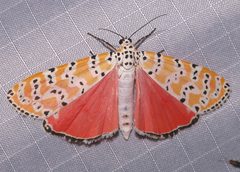
1- Utetheisa ornatrix(Ornate Bella Moth)
Utetheisa is a of tiger moths in the Erebidae, first described by Jacob Hübner in 1819. The genus is commonly known as rattlepod or rattlebox moths due to the association of many with Crotalaria (rattlebox) plants. are characterized by bright aposematic coloration and contain toxic , which serve as chemical defense. These alkaloids are also incorporated into the of males. The genus is monophyletic and includes multiple subgenera: Utetheisa, Atasca, Raanya, and Pitasila.
Pronunciation
How to pronounce Utetheisa: /juːtɛˈheɪsə/
These audio files are automatically generated. While they are not always 100% accurate, they are a good starting point.
Identification
Palpi porrect (extending forward), reaching beyond the . ciliated. Forewings long and narrow with short, somewhat erect outer margin. Hindwing with 5 arising from above angle of ; veins 6 and 7 from upper angle, vein 8 from middle of cell. Vein 3 of forewing arises before angle of cell; veins 4 and 5 from angle, vein 6 from upper angle, and veins 7–10 from a short areole.
Images
Distribution
Records from Denmark (DK), Norway (NO), and Sweden (SE) exist, though the has broader global distribution including tropical and subtropical regions, Pacific islands, and parts of Asia, Africa, and the Americas.
Diet
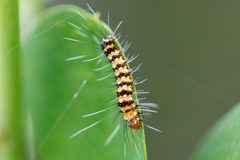
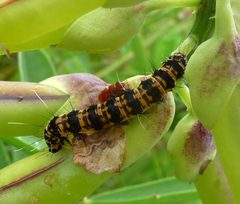
Caterpillars of many feed on Crotalaria (rattlebox).
Ecological Role
exhibit aposematic coloration warning of chemical defense. Toxic are sequestered and used for defense against .
Similar Taxa
- NyctemeraFormerly included members of Utetheisa subgenera Pitasila, Atasca, and Raanya; distinguished by wing venation and genitalic characters.