
Haploa contigua
Walker, 1855
Neighbor Moth
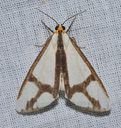
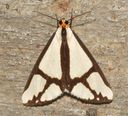
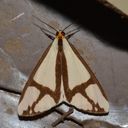
Haploa contigua, commonly known as the neighbor , is a tiger moth in the Erebidae. It was first described by Francis Walker in 1855. The species is distributed across eastern North America, ranging from Quebec south to Georgia and westward to the Great Plains. Like other members of the Haploa, it is characterized by bold color patterns and belongs to the tiger moth Arctiinae.
Pronunciation
How to pronounce Haploa contigua: /ˈhæploʊ ə ˈkɒntɪɡjuə/
These audio files are automatically generated. While they are not always 100% accurate, they are a good starting point.
Identification
are distinguished from other Haploa by specific wing pattern details, particularly the arrangement and shape of light and dark areas on the forewings. H. contigua can be confused with H. confusa (confused haploa ) and H. clymene (clymene moth); careful examination of wing pattern and, when available, larval plant association aids identification. Larvae are distinguished from H. confusa by subtle differences in striping pattern and confirmed by rearing to adult.
Images
Habitat
Occurs in diverse across its eastern North American range, including deciduous forests, woodland edges, and areas with suitable larval plants. Specific microhabitat preferences are not well documented.
Distribution
Eastern North America: Quebec to the mountains of Georgia, west to South Dakota, Arkansas, and Mississippi. Records exist from Vermont and throughout the core eastern range.
Seasonality
are active during the warmer months; exact period varies across the broad geographic range. Larvae have been observed in spring (April) in Missouri, suggesting as larvae or pupae with adult in summer.
Life Cycle
Complete with , larval, pupal, and stages. Larvae feed on foliage of herbaceous plants. Specific plant range is not well documented, though related Haploa utilize diverse herbaceous vegetation.
Behavior
Larvae are exposed feeders on foliage, not constructing shelters. are and attracted to light. Specific behavioral details are poorly documented.
Ecological Role
Larval herbivore; contributes to nutrient cycling through herbivory. may serve as prey for including bats and birds.
Human Relevance
Occasional subject of interest for lepidopterists and naturalists. Not known to be of economic importance. Larvae may be encountered during field surveys and plant monitoring activities.
Similar Taxa
- Haploa confusaSimilar wing patterns and larval appearance; distinguished by subtle differences in wing markings and larval striping details
- Haploa clymeneOverlapping range and similar bold coloration; H. clymene larvae feed on Eupatorium , providing a potential plant clue
More Details
Taxonomic History
Formerly classified in , now placed in Arctiinae within Erebidae following molecular phylogenetic revisions of Noctuoidea.
Research Needs
Larval plant associations, precise requirements, and detailed remain poorly documented and warrant further study.