
Apantesis arge
(Drury, 1773)
Arge Moth, Arge Tiger Moth
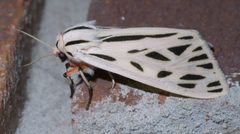
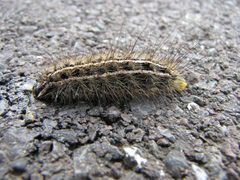
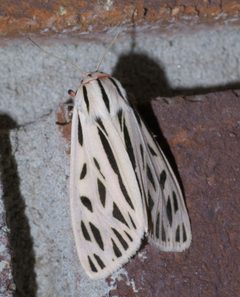
Apantesis arge is a medium-sized tiger moth in the Erebidae, formerly placed in the Grammia. The occurs across much of North America, with active from spring through late summer depending on latitude. Larvae are herbivores feeding on a diverse range of plant species including agricultural crops and weeds. The species exhibits geographic variation in voltinism, with two annually in southern and one or two in northern areas.
Pronunciation
How to pronounce Apantesis arge: /əˈpæn.tɪ.sɪs ˈɑːr.ɡiː/
These audio files are automatically generated. While they are not always 100% accurate, they are a good starting point.
Identification
Distinguished from similar Apantesis and former Grammia by specific wing pattern elements and geographic range. Forewing striping pattern differs from related species; precise identification may require examination of genitalia or reference to regional keys. The combination of striped forewings and brightly colored hindwings separates it from most non-tiger moth noctuids.
Images
Habitat
Open including fields, meadows, roadsides, and disturbed areas. Associated with agricultural landscapes and weedy vegetation due to larval plant preferences.
Distribution
North America: Quebec and Ontario south to Florida, west to New Mexico, north to North Dakota. Covers eastern and central United States and adjacent Canada.
Seasonality
active April–September throughout most of range; July–September in Quebec. Two per year in southern portions of range; one or two generations in northern areas.
Diet
Larvae feed on leaves of corn (Zea mays), dock (Rumex), lambsquarters (Chenopodium), grape (Vitis), plantain (Plantago), prickly pear cactus (Opuntia), smartweed (Polygonum), and sunflower (Helianthus). Diet breadth spans multiple plant including Poaceae, Polygonaceae, Chenopodiaceae, Vitaceae, Plantaginaceae, Cactaceae, and Asteraceae.
Host Associations
- Zea mays - larval food plantcorn
- Rumex - larval food plantdock
- Chenopodium - larval food plantlambsquarters
- Vitis - larval food plantgrape
- Plantago - larval food plantplantain
- Opuntia - larval food plantprickly pear cactus
- Polygonum - larval food plantsmartweed
- Helianthus - larval food plantsunflower
Life Cycle
Complete with , larva, pupa, and stages. Two annually in southern range; one or two in north. stage not explicitly documented in available sources.
Behavior
are and attracted to light. Larvae are external leaf feeders. No specialized such as sound production or chemical defense explicitly documented for this , though tiger moths in general are known for defensive compounds.
Ecological Role
Larval herbivore; contributes to nutrient cycling through consumption of plant . Serves as prey for and . Generalist feeding habits may facilitate persistence in disturbed and agricultural .
Human Relevance
Minor agricultural pest due to larval feeding on corn and sunflower. Not considered a major economic pest. Subject of citizen science observation and photography during monitoring events.
Similar Taxa
- Other Apantesis speciesFormerly classified in Grammia; share similar striped forewing patterns and bright hindwings. Require examination of pattern details or genitalia for definitive separation.
- Grammia speciesClosely related tiger moths with similar aposematic coloration; taxonomic boundaries between have been revised, causing historical confusion.
Misconceptions
Formerly classified in Grammia; many older references and some current databases may still list it as Grammia arge. The taxonomic transfer to Apantesis reflects phylogenetic revisions combining Grammia, Holarctia, and Notarctia into Apantesis.
More Details
Taxonomic History
Transferred from Grammia to Apantesis based on phylogenetic analysis combining multiple former (Grammia, Holarctia, Notarctia) into a revised Apantesis.
Voltinism
number varies geographically: two generations in southern range, one or two in northern range, reflecting to growing season length.
Sources and further reading
- BugGuide
- Wikipedia
- GBIF taxonomy match
- iNaturalist taxon
- NCBI Taxonomy
- Catalogue of Life
- Bug Eric: National Moth Week 2021 Review
- Bug Eric: Remembering National Moth Week 2018
- Noctuidae | Beetles In The Bush | Page 3
- Stalking tigers in Argentina | Beetles In The Bush
- Tiger beetles in Argentina’s Chaco forest | Beetles In The Bush
- Eriopis connexa on soybean in Argentina | Beetles In The Bush