
Stigmella populetorum
(Frey & Boll, 1878) Wilkinson et al., 1979
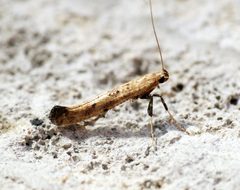
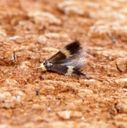
Stigmella populetorum is a minute leaf-mining in the Nepticulidae, with a wingspan of approximately 5 mm. It occurs across North America from Texas and Ohio to California, with additional records in Ontario and British Columbia. The completes two to three annually, with active from late June through September and larval activity observed in mid-June and August.

Pronunciation
How to pronounce Stigmella populetorum: /stɪɡˈmɛlə pɒpjuˈlɛtərəm/
These audio files are automatically generated. While they are not always 100% accurate, they are a good starting point.
Identification
Distinguished from other Stigmella by association with Populus plants and the specific mine on leaves. are extremely small (5 mm wingspan) and require microscopic examination for definitive identification. Larval mines on Populus species provide the most accessible diagnostic feature for field recognition.
Images
Appearance
Minute with wingspan of approximately 5 mm. As with other members of Nepticulidae, possess narrow, wings and reduced wing venation characteristic of pygmy moths.
Habitat
Associated with stands of Populus , including cultivated and native . Occurs in both eastern deciduous forest regions and western North American where poplars are present.
Distribution
Documented from Texas, Ohio, Kentucky, California, Ontario, and British Columbia. Distribution corresponds to the range of Populus across North America.
Seasonality
recorded from late June through September. Late instar larvae observed in mid-June and August. Two to three per year, with synchronized to leaf availability.
Diet
Larvae feed as leaf miners on Populus , including Populus deltoides (eastern cottonwood), Populus trichocarpa (black cottonwood), Populus nigra italica (Lombardy poplar), and Populus × canadensis (hybrid poplar). Mining occurs in leaf mesophyll, producing characteristic serpentine or blotch mines visible on leaf surfaces.
Host Associations
- Populus deltoides - larval eastern cottonwood
- Populus trichocarpa - larval black cottonwood
- Populus nigra italica - larval Lombardy poplar
- Populus × canadensis - larval hybrid poplar
Life Cycle
Holometabolous development with two to three annually. Late instar larvae present in mid-June and August, suggesting overlapping generations. emerge from late June through September. Larval development occurs within leaf mines; presumably occurs in soil or leaf litter, though this stage has not been explicitly documented.
Behavior
Larvae construct and feed within leaf mines, remaining concealed throughout development. are presumably or , as is typical for Nepticulidae, though specific adult activity patterns have not been described.
Ecological Role
As a , larvae contribute to herbivore pressure on Populus . The is one of multiple Stigmella species associated with poplars in North America, forming part of the guild of foliar-feeding insects on these trees. Non-native Populus species and hybrids serve as , facilitating population persistence across cultivated and natural landscapes.
Human Relevance
Minor economic relevance; occasionally present in cultivated poplar plantations and ornamental plantings. Not considered a significant pest. Presence on hybrid poplars used in forestry indicates potential for incidental impact on production, though damage levels are typically low.
Similar Taxa
- Stigmella multispicataAnother small Nepticulidae leafminer, but associated with Ulmus (elm) rather than Populus; distinguished by plant and mine
- Other Stigmella species on PopulusMultiple Stigmella mine Populus leaves; definitive identification requires examination of genitalia or molecular barcoding
More Details
Taxonomic history
Originally described as Nepticula populetorum by Frey & Boll in 1878, later transferred to Stigmella. The combination Stigmella populetorum was established by Wilkinson et al. in 1979.