Parornix vicinella
(Dietz, 1907)
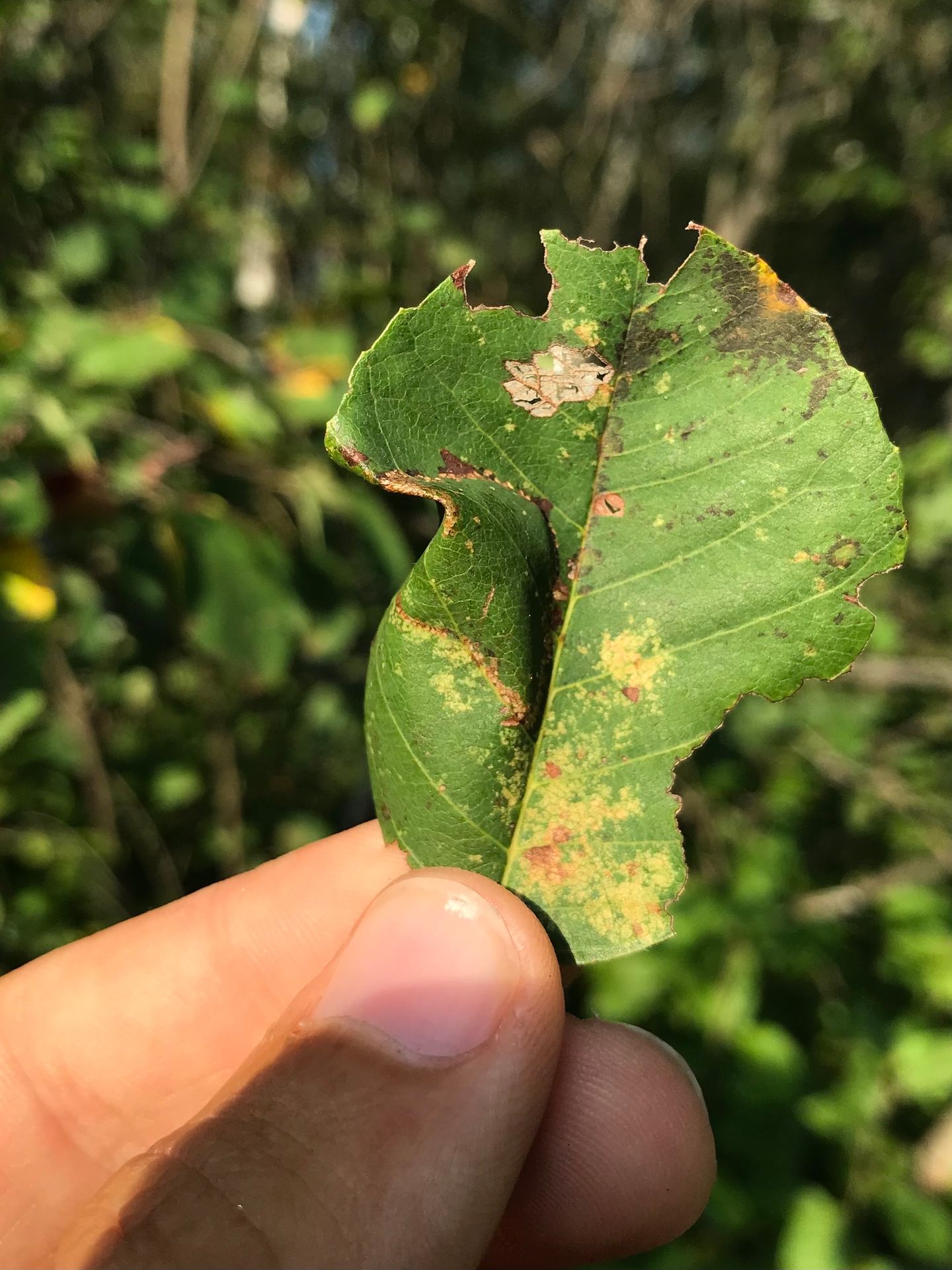
Parornix vicinella is a small leaf-mining in the . Its feed on birch (Betula alleghaniensis) and gray birch (Betula flava), creating distinctive mines in the leaves. The is known from the northeastern United States and adjacent Canadian provinces.
Pronunciation
How to pronounce Parornix vicinella: /pəˈrɔrnɪks vɪsɪˈnɛlə/
These audio files are automatically generated. While they are not always 100% accurate, they are a good starting point.
Identification
This can be distinguished from other Parornix by association with its specific Betula plants and the northeastern North distribution. are small with wingspans typical of the (approximately 8-12 mm), with gray- often marked with darker . Larval mines on birch leaves are diagnostic when combined with molecular or morphological confirmation.
Images
Habitat
Deciduous forests and woodlands where birch or gray birch occur, particularly in moist to mesic sites with well-drained soils.
Distribution
Northeastern North America: United States (Pennsylvania, Maine) and Canada (Manitoba, Ontario, Quebec, Nova Scotia).
Diet
feed on leaves of Betula alleghaniensis ( birch) and Betula flava (gray birch). do not feed.
Host Associations
- Betula alleghaniensis - larval
- Betula flava - larval
Life Cycle
are , feeding between the upper and lower of birch leaves. The complete has not been fully documented, but follows the typical pattern with multiple larval , the later of which may exit the mine to feed externally or pupate.
Behavior
construct blotch or tentiform mines in birch leaves. Mining creates visible translucent on leaf surfaces.
Ecological Role
As a , contribute to in birch-dominated forest and may serve as for and other .
Similar Taxa
- Parornix speciesOther Parornix are morphologically similar and require dissection or for definitive identification; association and geographic distribution help distinguish P. vicinella.
- Phyllonorycter speciesAlso on birch, but create different mine (typically lower-surface tentiform mines with visible ) and belong to a different within .