
Marmara opuntiella
Busck, 1907
Opuntia Leaf Miner
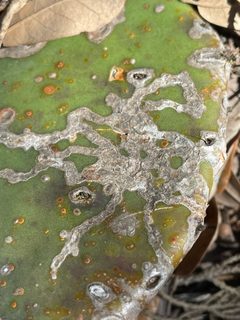
Marmara opuntiella is a microlepidopteran in the Gracillariidae, commonly known as the Opuntia . The was described by Busck in 1907 and is known from Texas, United States, and Mexico. Larvae create distinctive mines in the leaves of cactus . Records of similar larvae with identical habits from Colombia, Cuba, Ecuador, El Salvador, Guatemala, Haiti, Honduras, Peru, and Venezuela may also represent this species, suggesting a potentially broader Neotropical distribution.
Pronunciation
How to pronounce Marmara opuntiella: /mɑrˈmɑrɑ ɔˌpuntiˈɛlə/
These audio files are automatically generated. While they are not always 100% accurate, they are a good starting point.
Identification
are small typical of the Gracillariidae . The opuntiella refers to the Opuntia, indicating an association with prickly pear cacti. Larvae are recognized by their leaf-mining habit on cactus pads, creating serpentine or blotch mines within the succulent tissues of Nopalea and Opuntia . Similar larvae with identical mining habits have been recorded across the Neotropics, but definitive identification requires examination of adult .
Images
Habitat
Associated with arid and semi-arid environments where cacti occur. The inhabits regions supporting Nopalea and Opuntia cactus species, including the Texas Panhandle and adjacent areas in Mexico.
Distribution
Confirmed records from Texas, United States, and Mexico. Unconfirmed records of similar larvae with identical habits from Colombia, Cuba, Ecuador, El Salvador, Guatemala, Haiti, Honduras, Peru, and Venezuela; these may represent M. opuntiella or closely related .
Diet
Larvae feed on Nopalea and Opuntia , mining the leaves (cladodes) of their plants. do not feed on plant material.
Host Associations
- Nopalea - larval larvae mine the leaves
- Opuntia - larval larvae mine the leaves; specific epithet refers to this
Behavior
Larvae are leaf miners, feeding internally within cactus cladodes. The mining habit is distinctive and identical across from Texas through northern South America.
Ecological Role
As a herbivore on cacti, the contributes to the natural herbivore load on Opuntia and Nopalea species. The leaf-mining habit may affect plant photosynthetic capacity and water relations.
Human Relevance
The has potential significance as a agent for Opuntia species. Cacti in the Opuntia have become problematic weeds in many regions worldwide, and herbivores such as M. opuntiella have been investigated for their potential to manage these invasions.
Similar Taxa
- Other Marmara speciesMembers of the Marmara are morphologically similar microlepidopterans, many with leaf-mining larvae; plant association is critical for differentiation
- Other Gracillariidae on CactaceaeSeveral gracillariid specialize on cacti; accurate identification requires examination of genitalia and molecular data
More Details
Taxonomic Uncertainty
The identity of from Colombia, Cuba, Ecuador, El Salvador, Guatemala, Haiti, Honduras, Peru, and Venezuela remains unresolved. These records are based on larval and mining habits identical to M. opuntiella, but definitive assignment to this requires specimens and molecular confirmation.
Biological Control Potential
The specialized feeding on Opuntia has drawn attention to M. opuntiella as a potential biocontrol agent for prickly pear cacti, though deliberate introductions would require extensive -specificity testing.
Sources and further reading
- BugGuide
- Wikipedia
- GBIF taxonomy match
- iNaturalist taxon
- NCBI Taxonomy
- Catalogue of Life
- A Tiny and Beautiful Moth from Texas | Bug Squad
- Uncategorized | Blog - Part 41
- Uncategorized | Blog - Part 18
- New fish species described from the streams of Manyas Lake basin, Turkey | Blog
- A new trout species described from the Alakır Stream in Antalya, Turkey | Blog