
Marmara fraxinicola
Braun, 1922
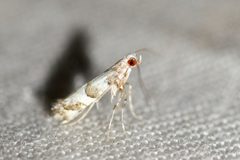
Marmara fraxinicola is a micro- in the Gracillariidae, first described by Braun in 1922. The is known from northeastern North America, with records from Québec, Canada, and the U.S. states of Ohio, Vermont, and New York. It has one per year and is a stem-miner of ash trees (Fraxinus species).
Pronunciation
How to pronounce Marmara fraxinicola: //ˈmɑr.mə.rə frækˈsɪn.ɪˌkoʊ.lə//
These audio files are automatically generated. While they are not always 100% accurate, they are a good starting point.
Identification
Identification requires examination of genitalia or molecular markers. The is distinguished from by association with Fraxinus species and geographic distribution. Larval identification is possible through stem-mine characteristics on ash hosts.
Images
Habitat
Associated with containing its plants, Fraxinus americana (white ash) and Fraxinus pennsylvanica (green ash). These are typically deciduous forest and woodland environments, riparian corridors, and urban or suburban areas where ash trees occur.
Distribution
Northeastern North America: Québec (Canada), and Ohio, Vermont, and New York (United States). GBIF records additionally indicate presence in Ontario, Canada.
Seasonality
One per year (). Specific period timing is not documented in available sources.
Diet
Larvae feed on Fraxinus americana and Fraxinus pennsylvanica. They mine in the stems of their plants. feeding habits are not documented.
Host Associations
- Fraxinus americana - larval white ash
- Fraxinus pennsylvanica - larval green ash
Life Cycle
One per year. Larvae develop as stem miners within ash plants. Detailed descriptions of , pupal, and periods are not available.
Behavior
Larvae are stem miners, tunneling within ash stems. are presumably and attracted to light, as is common in Gracillariidae, though specific behavioral observations are not documented.
Ecological Role
As a herbivore of ash trees, the contributes to the associated with Fraxinus species. Its stem-mining habit creates internal galleries that may provide microhabitats for other organisms, though specific ecological interactions are not documented.
Human Relevance
The has no documented direct economic or medical importance. It may be affected by conservation concerns for its ash , which are threatened by emerald ash borer (Agrilus planipennis) and ash decline across North America.
Similar Taxa
- Other Marmara species in the Marmara are morphologically similar and require dissection or molecular analysis for separation; many are distinguished primarily by plant association and geographic range.
More Details
Taxonomic history
Described by Annette Frances Braun in 1922, a prolific American lepidopterist who described numerous Gracillariidae .
Conservation context
The widespread mortality of ash trees due to emerald ash borer invasion may threaten local of this ash- , though specific population impacts have not been studied.
Sources and further reading
- BugGuide
- Wikipedia
- GBIF taxonomy match
- iNaturalist taxon
- Catalogue of Life
- A Tiny and Beautiful Moth from Texas | Bug Squad
- Uncategorized | Blog - Part 41
- Uncategorized | Blog - Part 18
- New fish species described from the streams of Manyas Lake basin, Turkey | Blog
- A new trout species described from the Alakır Stream in Antalya, Turkey | Blog