
Phyllonorycter occitanica
(Frey & Boll, 1876)
Phyllonorycter occitanica is a micro- in the Gracillariidae, known from Texas, United States. The larvae are leaf miners that feed on elm (Ulmus), specifically Ulmus fulva and Ulmus rubra. Like other members of its , it produces characteristic blotch mines on the leaves of its plants. The species was described by Frey and Boll in 1876.
Pronunciation
How to pronounce Phyllonorycter occitanica: //ˌfɪloʊnəˈrɪktər ˌɒksɪˈtænɪkə//
These audio files are automatically generated. While they are not always 100% accurate, they are a good starting point.
Identification
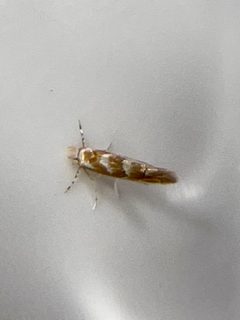
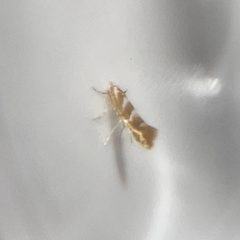
are small , likely with the typical Phyllonorycter : narrow, wings with distinctive patterning of white and darker markings. The is characterized by forewings with a distinct pattern of white or pale bands and spots against a brown or golden ground color. Larval mines on elm leaves appear as blotch mines, distinguishable from linear mines of related genera. Definitive identification of adults to level requires examination of genitalia or , as many Phyllonorycter species are externally similar.
Images
Habitat
Associated with elm trees (Ulmus ), particularly in areas where Ulmus fulva (slippery elm) and Ulmus rubra (red elm) occur. The precise preferences of the are unknown, but larvae are confined to the foliage of their trees.
Distribution
Known from Texas, United States. Distribution records are sparse, with only six observations documented on iNaturalist.
Diet
Larvae feed on Ulmus fulva (slippery elm) and Ulmus rubra (red elm). They mine the leaves of their plants, creating blotch mines. feeding habits are unknown.
Host Associations
- Ulmus fulva - larval plantslippery elm
- Ulmus rubra - larval plantred elm
Life Cycle
Larvae develop as leaf miners inside elm leaves. The specific details of , number of per year, and stage are unknown for this .
Behavior
Larvae are endophagous leaf miners, feeding internally within elm leaf tissue. have been attracted to blacklight, suggesting activity.
Ecological Role
As a , the larva contributes to the natural herbivore load on native elm . The species is likely a food source for and other natural enemies of leaf-mining Lepidoptera.
Human Relevance
No known economic or agricultural significance. The is not considered a pest, though related leaf miners can occasionally cause minor aesthetic damage to ornamental elms.
Similar Taxa
- Other Phyllonorycter speciesMany congeneric are externally similar and require genitalia examination or analysis for reliable identification. Some species also feed on Ulmus.
- Cameraria speciesAlso leaf-mining on elms, but typically produce linear or serpentine mines rather than the blotch mines characteristic of Phyllonorycter.
More Details
Taxonomic note
The specific epithet 'occitanica' is unusual for a North American , suggesting possible European origin or naming convention, though the species is currently known only from Texas.