Cameraria guttifinitella
(Clemens, 1859)
Poison Ivy Leaf-miner Moth
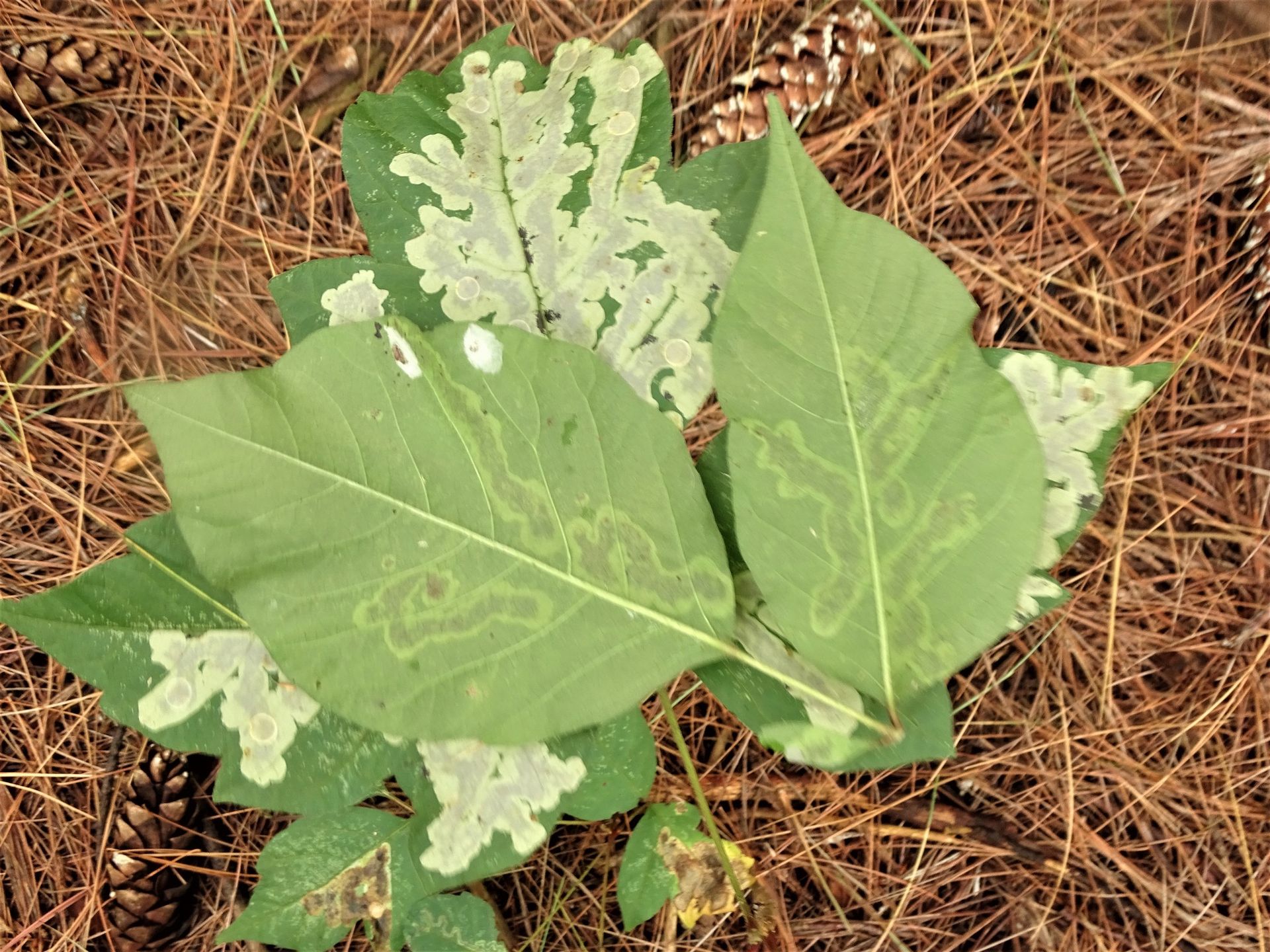
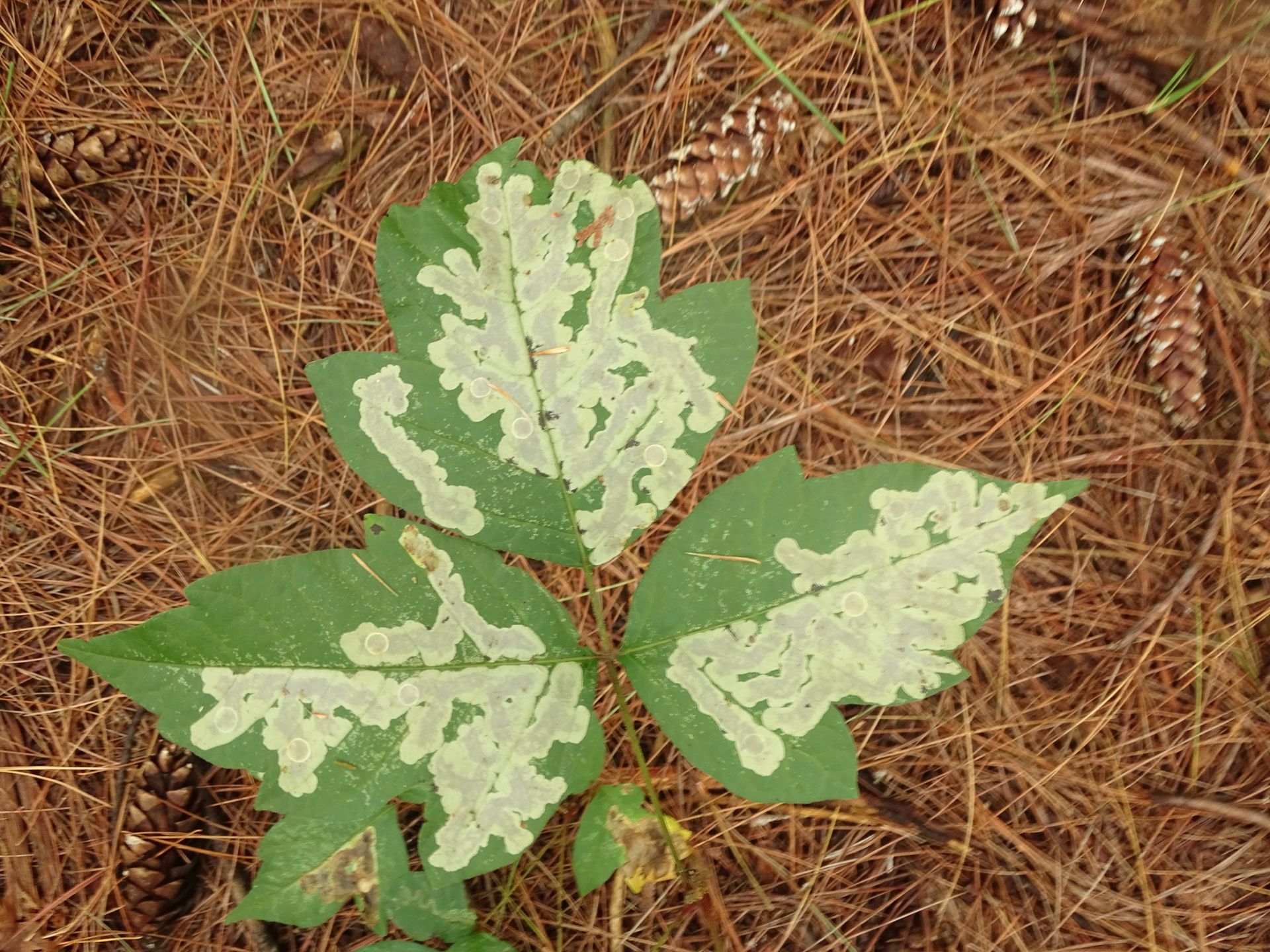
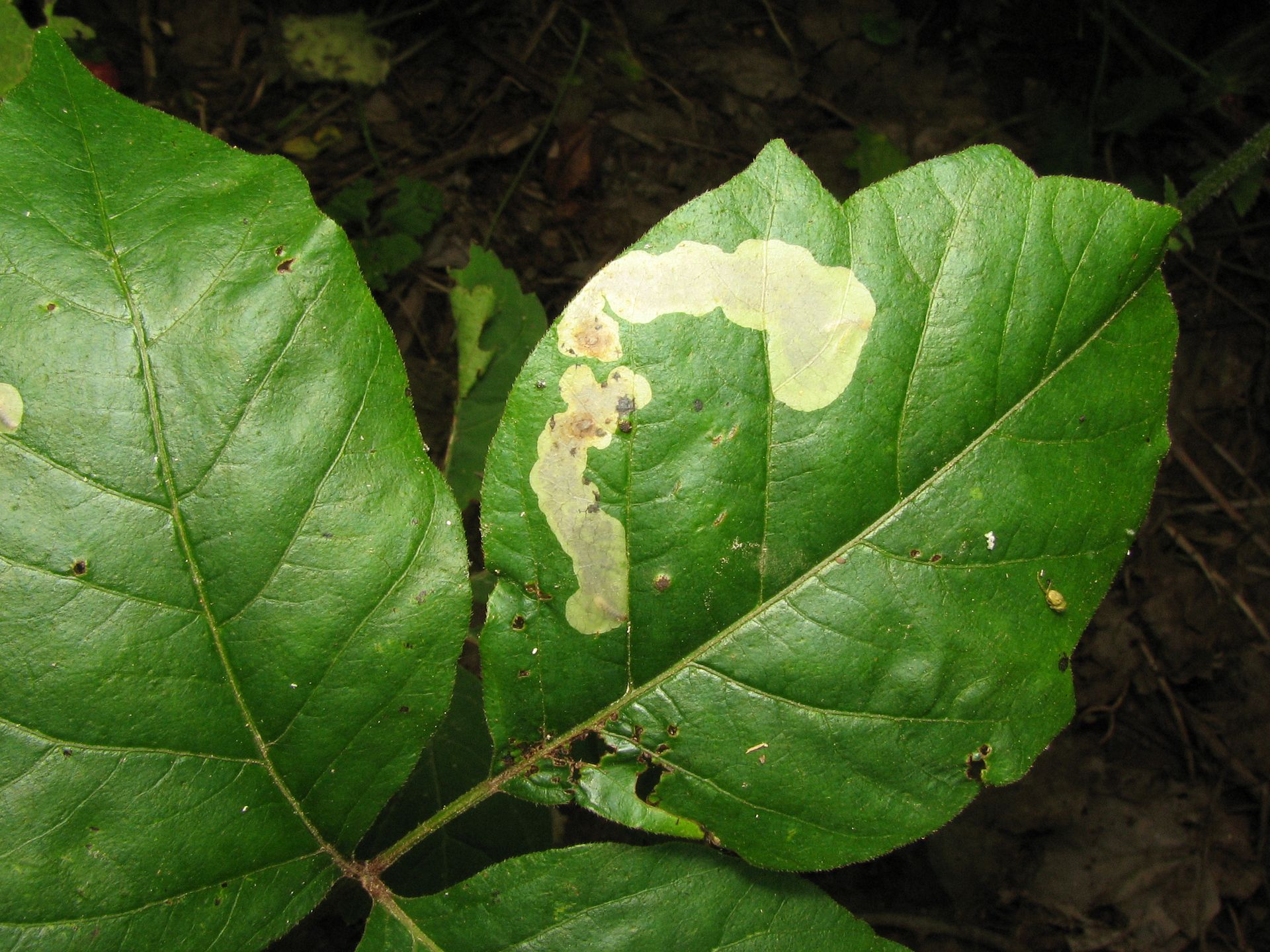
A small North American leaf-mining in the Gracillariidae, with a wingspan of approximately 7 mm. Larvae are specialized feeders on poison ivy and poison oak (Toxicodendron ), creating characteristic mines within leaves. Females exhibit low leaf selectivity prior to oviposition, accepting 78% of available leaves but actually ovipositing on only 2%. The species maintains low densities compared to Cameraria ohridella, attributed to more effective top-down control by .
Pronunciation
How to pronounce Cameraria guttifinitella: //ˌkæməˈrɛə riə ˌɡʌtɪˌfaɪnɪˈtɛlə//
These audio files are automatically generated. While they are not always 100% accurate, they are a good starting point.
Identification
Extremely small size (7 mm wingspan) distinguishes this from larger . Identification to species level requires examination of genitalia or larval plant association. Similar to other Cameraria species; definitive separation from requires examination.
Images
Appearance
Very small with wingspan approximately 7 mm. Specific coloration and pattern details not documented in available sources.
Distribution
Widespread in North America. Documented from Canada: Manitoba, Québec, Ontario, British Columbia; United States: Texas, California, Kentucky, Maine, Maryland, Michigan, New York, Vermont, Connecticut, Illinois, Arkansas.
Diet
Larvae feed on Toxicodendron pubescens (poison oak) and Toxicodendron radicans (poison ivy).
Host Associations
- Toxicodendron pubescens - larval poison oak
- Toxicodendron radicans - larval poison ivy
- Quercus emoryi - oviposition sitehas been observed as site of oviposition studies, though primary larval are Toxicodendron
Life Cycle
Larval stage creates leaf mines within plant foliage. Specific details of , pupal, and longevity not documented.
Behavior
Females exhibit low leaf selectivity prior to oviposition: 78% of leaves are judged acceptable, but only 2% actually receive . This disconnect between acceptance and oviposition represents a -level trait also observed in C. ohridella. Larvae are leaf miners, feeding internally within leaf tissue.
Ecological Role
on Toxicodendron . is constrained by efficient top-down control from , in contrast to the C. ohridella which achieves much higher densities due to deficient parasitoid control.
Human Relevance
references association with poison ivy and poison oak, plants of medical significance to humans. No direct economic or medical importance documented.
Similar Taxa
- Cameraria ohridellaBoth exhibit low pre-oviposition leaf selectivity (78% vs. 96% acceptance), but C. guttifinitella achieves only 2% actual oviposition versus 89% in C. ohridella, and maintains densities more than 100 times lower due to more effective control.
More Details
Oviposition behavior study
Research comparing C. guttifinitella and C. ohridella demonstrated that low leaf selectivity prior to oviposition is a -level trait in Cameraria, not unique to the pest C. ohridella. The dramatic difference in between the two appears driven by top-down regulation rather than bottom-up factors.