Bucculatrix enceliae
Braun, 1963
Bucculatrix enceliae is a minute in the Bucculatricidae, described by Annette Frances Braun in 1963. The is restricted to the southwestern United States, with confirmed records from California and Arizona. are active in spring, and the larvae are specialized leaf miners of Encelia farinosa, a desert shrub in the sunflower family.
Pronunciation
How to pronounce Bucculatrix enceliae: //ˌbʌkjʊˈlætrɪks ɛnˈkeɪliaɪ//
These audio files are automatically generated. While they are not always 100% accurate, they are a good starting point.
Identification
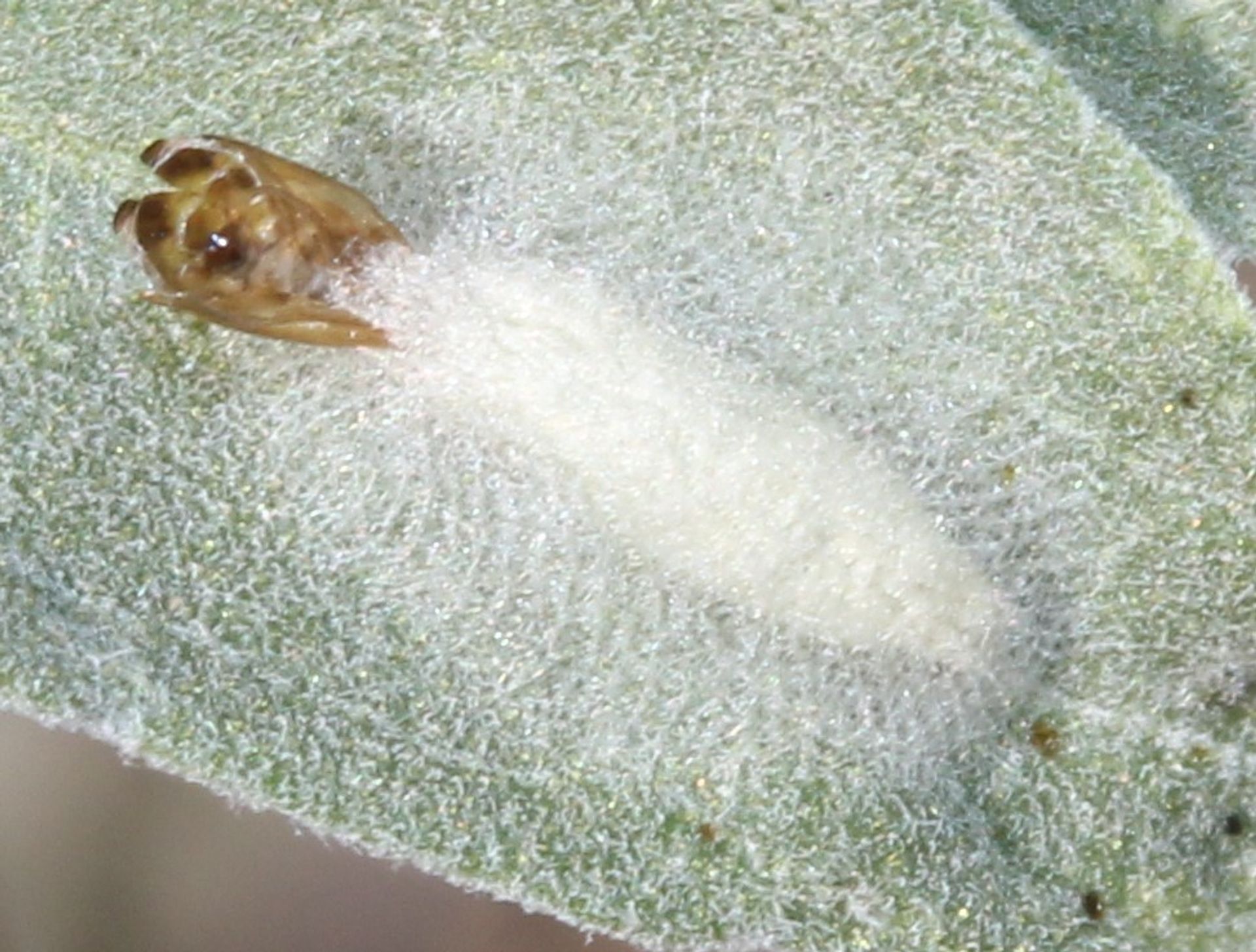
The minute size (7–9 mm wingspan) and spring period (April–May) help distinguish this from other small in its range. Definitive identification requires examination of genitalia or association with the plant Encelia farinosa, as Bucculatrix species are morphologically similar and often separable only by host specificity. The is recognizable by the ribbed cocoon constructed by larvae.
Images
Appearance
A very small with a wingspan of 7–9 mm. have narrow, pointed forewings typical of the . The body is slender and compact, consistent with the 'ribbed cocoon-maker' characteristic of Bucculatrix .
Habitat
Associated with desert and semi-arid environments where the plant Encelia farinosa (brittlebush) grows. This includes rocky slopes, desert washes, and open scrubland in the Sonoran and Mojave Desert regions.
Distribution
Recorded from California and Arizona, in the southwestern United States. The range corresponds to that of its plant Encelia farinosa.
Seasonality
have been recorded on wing from April to May. This spring period coincides with the active growing season of the plant.
Diet
Larvae feed exclusively on Encelia farinosa (brittlebush, Asteraceae). They mine the leaves of this plant, creating internal feeding tunnels.
Host Associations
- Encelia farinosa - larval brittlebush; larvae mine leaves
Life Cycle
Larvae are leaf miners that feed internally within leaves of Encelia farinosa. The constructs a characteristic ribbed cocoon for , a trait shared by all members of the Bucculatrix.
Behavior
are presumably or , as is typical for the . Larvae are concealed feeders within leaf tissue.
Ecological Role
As a specialized herbivore, the contributes to the natural turnover of foliage on its plant Encelia farinosa. It likely serves as prey for including birds, spiders, and , though specific records are lacking.
Human Relevance
No known economic importance. The is of interest to lepidopterists and ecologists studying plant-insect specialization in desert .
Similar Taxa
- Other Bucculatrix speciesMorphologically similar; often distinguished by plant association and geographic range. B. enceliae is separable by its restriction to Encelia farinosa in the southwestern United States.
- Nepticulidae (micro-moths)Similar minute size and leaf-mining larvae; distinguished by wing venation, genitalia, and larval mine .
More Details
Taxonomic history
Described by Annette Frances Braun in 1963, a prolific American lepidopterist who specialized in micro-. The specific epithet enceliae directly references the plant Encelia.
Conservation status
No formal assessment; likely secure given the widespread distribution of its plant, though localized degradation in the southwestern United States could impact specific .