
Cyclophora dataria
(Hulst, 1887)
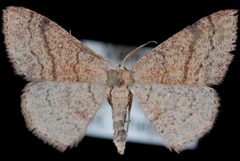
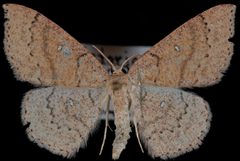
A small geometrid found in western North American oak woodlands. have a wingspan of 23–25 mm and are active in late spring and summer. The larvae feed exclusively on Quercus and can be found in July and August. As a member of Geometridae, larvae possess reduced (two or three pairs), producing the characteristic looping locomotion of inchworms.
Pronunciation
How to pronounce Cyclophora dataria: /saɪˈklɒfərə dəˈtɛərɪə/
These audio files are automatically generated. While they are not always 100% accurate, they are a good starting point.
Identification
are small geometrid moths (23–25 mm wingspan) associated with Quercus-dominated in western North America. The Cyclophora can be challenging to distinguish from similar geometrids without close examination; specific diagnostic features for C. dataria are not detailed in available sources. Larvae can be recognized as geometrids by their reduced number (2–3 pairs) and looping movement pattern, with presence on oak leaves supporting identification.
Images
Habitat
Mixed or deciduous woods containing Quercus . Specific microhabitat preferences beyond oak association are not documented.
Distribution
Western North America: British Columbia to California, east to Arizona, and north to Montana.
Seasonality
active in late spring and summer. Larvae present in July and August.
Diet
Larvae feed on leaves of Quercus . feeding habits are not documented.
Host Associations
- Quercus - larval food plantLarvae feed on leaves; specific oak not distinguished in sources.
Life Cycle
Complete with documented larval stage in July–August and in late spring and summer. Voltinity and stage are not specified in available sources.
Behavior
are and attracted to light. Specific behavioral observations beyond period are not documented. As geometrid larvae, early instars likely exhibit looping locomotion due to reduced number.
Ecological Role
Larval herbivore on Quercus, contributing to nutrient cycling and serving as prey for and . Specific quantitative impacts or interactions are not documented.
Human Relevance
No documented economic or cultural significance. Observed during survey and citizen science activities such as National Moth Week.
Similar Taxa
- Other Cyclophora speciesCongeneric in North America share similar size range and preferences; identification to species level requires detailed morphological examination not specified in general sources.
- Other Sterrhinae geometridsSmall geometrid moths in the same share general appearance and oak woodland ; wing pattern and genitalia examination typically required for separation.
More Details
Taxonomic history
Originally described as Acidalia dataria by Hulst in 1887; later transferred to Cyclophora.