
Epirrita autumnata
(Borkhausen, 1794)
Autumnal Moth
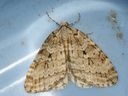
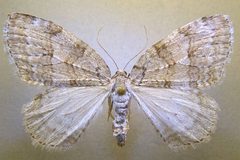
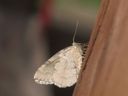
Epirrita autumnata, the autumnal , is a geometrid moth native to northern Fennoscandia and the Palearctic region. Its larvae feed primarily on mountain birch (Betula pubescens ssp. tortuosa and ssp. czerepanovii) foliage, with capable of defoliating extensive birch forests. The exhibits cyclic with outbreak and non-outbreak phases. overwinter in , showing exceptional cold hardiness with supercooling points reaching −36.5 °C. females suffer substantial pressure from , particularly harvestmen.
Pronunciation
How to pronounce Epirrita autumnata: /ɛˈpɪrɪtə ɔːˈtʌmnɑːtə/
These audio files are automatically generated. While they are not always 100% accurate, they are a good starting point.
Images
Habitat
Mountain birch forests dominated by Betula pubescens ssp. tortuosa or ssp. czerepanovii. Stand age structure influences , with higher caterpillar densities recorded in old-growth stands compared to young stands. Suitable oviposition sites and food quality changes in ageing trees contribute to this pattern.
Distribution
Northern Fennoscandia (primary range), throughout the Palearctic region, and the Near East. GBIF records indicate presence in Europe and Northern Asia (excluding China), with additional records from North America and Belgium.
Seasonality
active late in the season; period occurs sufficiently late that avian has minimal impact on survival. laid in autumn, entering at early embryonic stage; embryo growth resumes in late summer or early autumn of the following year.
Diet
Foliage of mountain birch (Betula pubescens ssp. tortuosa, ssp. czerepanovii). Larvae consume buds as a specific feeding strategy to alleviate . Diet quality directly affects larval growth rate, pupal weight, and subsequent .
Host Associations
- Betula pubescens ssp. tortuosa - primary Mountain birch; larval growth varies substantially among individual trees, with differences of 9–54% in growth rate between worst and best trees
- Betula pubescens ssp. czerepanovii - primary Mountain birch; foliar phenolics including hydrolyzable tannins and flavonoid glycosides affect larval performance and immune defense
Life Cycle
Overwinters as . Eggs enter at early developmental stage; diapause ends in January, with 50% hatch time decreasing from 60 days to 10–14 days at ~22 °C. Larvae feed on birch foliage, with growth rates varying at multiple hierarchical levels: among trees, ramets within trees, branches within ramets, and shoots within branches. occurs after larval development; pupal weight correlates with . Six hymenopteran attack larvae within the range, with early larval parasitoids showing mean rate of 11%.
Behavior
Larval crowding triggers phenotypic responses: on high-quality food, crowded larvae show increased consumption and faster development than solitary larvae, completing the last instar earlier without reduced . This facilitates rapid build-up during increase phases. On poor-quality food, crowded and solitary larvae perform similarly; larvae pupate at smaller size rather than prolong development. females exhibit oviposition selecting among trees based on larval growth performance variation. Larvae demonstrate immune defense via response to foreign implants.
Ecological Role
Herbivore; periodic capable of extensive defoliation of mountain birch forests. cycles create pulsed resource availability for and . Foliar phenolic compounds in plants create trade-offs between larval growth and immunocompetence, potentially affecting vulnerability to natural enemies. Serves as host for at least six hymenopteran parasitoid species in northern Fennoscandia.
Human Relevance
Economic and ecological impact through defoliation of mountain birch forests during , affecting structure and potentially timber or subsistence resources in northern regions.
Similar Taxa
- Operophtera brumataWinter moth; congeneric or closely related geometrid with similar and associations, distinguished by (earlier season) and geographic pattern of
- Epirrita christyiClose relative with more restricted distribution; E. autumnata has much wider Palearctic range
- Epirrita dilutataClose relative with more restricted distribution; E. autumnata has much wider Palearctic range
More Details
Cold hardiness
exhibit exceptional freeze avoidance through supercooling. Supercooling point (SCP) in autumn ranges from −34.9 to −36.5 °C; during embryogenesis at ≥ −3 °C, SCP rises to −28.3 to −29.8 °C due to reduced cold hardiness. Eggs in at ≤ −10 °C maintain low SCP. Field freezing risk below ~−36 °C during /post-diapause quiescence (midwinter) and below ~−29 °C during embryogenesis (late winter/spring). Geographic variation exists in diapause intensity and cold hardiness strategies among populations.
Population dynamics
Cyclic occur in northern Fennoscandia; non-outbreaking persist in southern Finland. differ between outbreak and non-outbreak ranges, with early larval parasitoids showing delayed at population level but immediate response at small spatial (among trees). reduces reproductive success by 60–85% in non-outbreaking populations; mortality reduces success by 20–40%.
Genetic structure
Deep sympatric mtDNA divergence exists with five COI sub-clades, most sympatric with little geographic structure. Nuclear markers (ITS2, Wingless) show no variation, indicating single status despite mitochondrial divergence. (12% ) with two strains associated with different mtDNA sub-clades may explain mitochondrial patterns through selective sweeps.
Pathogens
Abisko virus, a 10 kb virus with negevirus-like organization, discovered in transcriptome of diseased larva in Sweden. Detected only in few and single larval transcriptome; unlikely factor in . Virus shows affiliations with both insect-infecting negeviruses and plant-infecting viruses, leaving origin and unresolved.
Sources and further reading
- BugGuide
- GBIF taxonomy match
- iNaturalist taxon
- NCBI Taxonomy
- Catalogue of Life
- Foliar Phenolics are Differently Associated with Epirrita autumnata Growth and Immunocompetence
- Diapause, embryo growth and supercooling capacity of Epirrita autumnata eggs from northern Fennoscandia
- Consumption of Apical Buds as a Mechanism of Alleviating Host Plant Resistance for Epirrita autumnata Larvae
- Larval parasitism in outbreaking and non-outbreaking populations of <i>Epirrita autumnata</i> (Lepidoptera, Geometridae)
- Stand age‐structure influence in a low population peak of Epirrita autumnata in a mountain birch forest
- Characterization of a Novel RNA Virus Discovered in the Autumnal Moth Epirrita autumnata in Sweden
- Inbreeding and extreme outbreeding cause sex differences in immune defence and life history traits in Epirrita autumnata
- No Evidence of Genetic Specialization to Different Natural Host Plants within or among Populations of a Polyphagous Geometrid moth Epirrita autumnata
- Within‐tree and among‐tree variation in growth of Epirrita autumnata on mountain birch leaves
- Influence of adult and egg predation on reproductive success of Epirrita autumnata (Lepidoptera: Geometridae)
- How do food quality and larval crowding affect performance of the autumnal moth, Epirrita autumnata?
- Deep sympatric mtDNA divergence in the autumnal moth (Epirrita autumnata)