
Eupithecia rotundopuncta
Packard, 1871
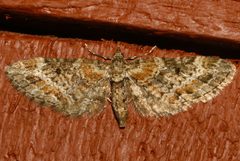
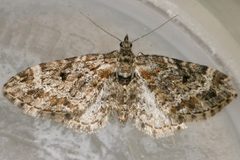
Eupithecia rotundopuncta is a small in the Geometridae, first described by Alpheus Spring Packard in 1871. It is native to western North America, ranging from Arizona to the Pacific coast and north to Vancouver Island. The has been documented as a of apple flowers, contributing to nighttime pollination services in agricultural settings. As a member of the Eupithecia, it shares the characteristic narrow-winged and resting posture typical of 'pug' moths.
Pronunciation
How to pronounce Eupithecia rotundopuncta: /juːˌpɪˈθeɪʃə ˌroʊtʌndoʊˈpʌŋkta/
These audio files are automatically generated. While they are not always 100% accurate, they are a good starting point.
Identification
Members of the Eupithecia are recognized by their narrow wings and distinctive resting posture. Positive identification of E. rotundopuncta to level requires examination of subtle morphological characters, often necessitating genitalia dissection. The species occurs within a genus where many species can only be distinguished by characters invisible to the naked or standard camera equipment.
Images
Appearance
have a wingspan of approximately 17–20 mm. Like other Eupithecia , it possesses narrow wings and a slender body. Specific coloration and pattern details for this species are not documented in the provided sources.
Habitat
Found in dry, mixed conifer forest with oak components at elevations around 7,000 feet. The has been recorded in association with diverse floral settings that support insect activity.
Distribution
Western North America from Arizona to the Pacific coast, extending north to Vancouver Island in British Columbia, Canada.
Behavior
are attracted to blacklights and porch lights. The has been observed visiting apple flowers at night, indicating foraging . As with other Eupithecia species, adults likely rest with wings folded in the characteristic 'pug' posture.
Ecological Role
Documented as a of apple flowers, contributing to nighttime pollination services. This role was demonstrated in a 2021 study on apple production, where Eupithecia were among the nocturnal visitors to apple blossoms.
Human Relevance
Recognized as a beneficial in apple orchards. The contributes to pollination services that support fruit production, illustrating the value of pollinators in agricultural .
Similar Taxa
- Other Eupithecia speciesNarrow-winged and resting posture are shared across the ; -level identification requires specialized examination
- Other Geometridae (inchworm moths)Similar body plan and wing shape; Eupithecia distinguished by particularly narrow wings and unique resting posture
More Details
Research significance
A 2021 study in the Journal of Economic Entomology documented Eupithecia visiting apple flowers at night, highlighting their contribution to pollination in agricultural settings. This research demonstrated that moths previously overlooked as provide valuable services.