
Eupithecia niveifascia
(Hulst, 1898)
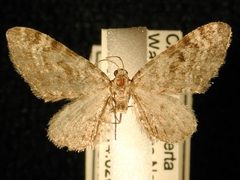
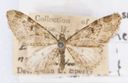
Eupithecia niveifascia is a small geometrid first described by George Duryea Hulst in 1898. It occurs in western North America from southwestern Alberta to Vancouver Island, and south to New Mexico. are active from late May to mid-July and have been documented visiting apple flowers, contributing to pollination services.
Pronunciation
How to pronounce Eupithecia niveifascia: /juːpɪˈθiːʃə nɪviˈfæʃə/
These audio files are automatically generated. While they are not always 100% accurate, they are a good starting point.
Identification
Members of Eupithecia are recognized by their narrow wings and distinctive resting posture. Definitive identification of E. niveifascia to level requires examination of genitalia or other minute characters not visible to standard photography or field observation. Similar species within the can only be reliably distinguished through dissection.
Images
Habitat
Dry, mixed conifer forest with oaks at elevations around 7,000 feet. Associated with supporting good floral diversity.
Distribution
North America: southwestern Alberta west to Vancouver Island, north to northern coastal British Columbia, and south to New Mexico.
Seasonality
recorded on wing from the end of May to mid-July.
Behavior
are attracted to lights at night. Has been observed visiting apple flowers, indicating foraging .
Ecological Role
Contributing member of ; documented visiting apple flowers in agricultural settings. May serve as for in Agathidinae ( Braconidae), which have been observed hunting Eupithecia caterpillars.
Human Relevance
Documented as a of apple crops, contributing to fruit set and seed development comparable to daytime pollination levels in some studies. This dual role illustrates that traditionally overlooked in agricultural contexts provide valuable services.
Similar Taxa
- Other Eupithecia speciesAll share narrow wings and similar resting posture; -level identification requires genitalia dissection
- Other Geometridae (inchworm moths)Eupithecia distinguished within by wing shape and posture, but family-level identification of small geometrids can be challenging
More Details
Taxonomic note
Originally described as Tephroclystis niveifascia by Hulst in 1898; later transferred to Eupithecia. The epithet 'niveifascia' combines Latin 'niveus' (snow-white) and 'fascia' (band), likely referring to a pale transverse wing marking.
Research significance
Photographic documentation of Eupithecia ( not specified, potentially including E. niveifascia) on apple flowers contributed to a 2021 study demonstrating substantial pollination contributions to apple production, challenging the traditional focus on alone.