
Eupithecia multistrigata
(Hulst, 1896)
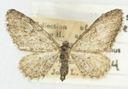
Eupithecia multistrigata is a small in the Geometridae, first described by George Duryea Hulst in 1896. It is widespread across western North America, ranging from the Canadian provinces of Alberta and Saskatchewan south through the western United States to Arizona and New Mexico. The has a wingspan of approximately 20 mm. Like other members of the Eupithecia, commonly known as "pugs," it exhibits the characteristic narrow wings and distinctive resting posture typical of this diverse group of inchworm moths.
Pronunciation
How to pronounce Eupithecia multistrigata: /juːpɪˈθiːʃə mʌltɪstrɪˈɡɑːtə/
These audio files are automatically generated. While they are not always 100% accurate, they are a good starting point.
Identification
Members of the Eupithecia ("pugs") are recognized by their narrow wings and unique resting posture. -level identification within this genus is notoriously difficult and often requires examination of genitalia characters. Eupithecia multistrigata may be distinguished from similar western North American by subtle wing pattern differences, though specific diagnostic features are not detailed in general sources. Dissection and comparison with reference specimens or specialized literature is typically necessary for confident species determination.
Images
Appearance
Small with wingspan approximately 20 mm. As a member of the Eupithecia, it possesses narrow wings and exhibits the genus-typical resting posture. Specific coloration and pattern details for this are not documented in available sources.
Habitat
Associated with dry, mixed conifer forest with oaks, based on documented occurrence at 7,000 feet elevation in southwest New Mexico. The broader western North American distribution suggests adaptability to varied montane and foothill environments across the region.
Distribution
Widespread in western North America. Documented from Canadian provinces: Alberta, Saskatchewan. Documented from U.S. states: Arizona, California, Colorado, Idaho, Montana, Nevada, New Mexico, Oregon, Utah, Washington, Wyoming.
Behavior
; attracted to artificial lights. Has been observed visiting apple flowers at night, contributing to nocturnal pollination activity.
Ecological Role
Documented as a visitor to apple flowers, indicating potential role as a nighttime of flowering plants. As a member of Geometridae, larvae (if following pattern) would be foliage feeders, though specific larval for this is unknown.
Human Relevance
Identified as one of several visiting apple flowers in a 2021 study on nighttime pollination in fruit production, suggesting possible unrecognized value in agricultural pollination services.
Similar Taxa
- Other Eupithecia speciesNumerous occur in western North America; -level identification requires detailed examination of genitalia and wing pattern elements
- Other Geometridae (inchworm moths)Share general body plan and larval ; Eupithecia distinguished by narrow wings and characteristic resting posture
More Details
Taxonomic history
First described by George Duryea Hulst in 1896