
Eupithecia maestosa
(Hulst, 1896)
pug moth
Eupithecia maestosa is a small geometrid described by George Duryea Hulst in 1896. It belongs to the diverse 'pug' Eupithecia, characterized by narrow wings and distinctive resting posture. The occurs across western North America from Alberta to California and Texas, and has been documented visiting apple flowers as a .
Pronunciation
How to pronounce Eupithecia maestosa: /juːˈpɪθɪkiə maɪˈstoʊsə/
These audio files are automatically generated. While they are not always 100% accurate, they are a good starting point.
Identification
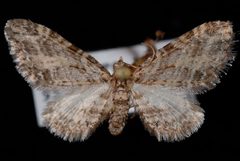
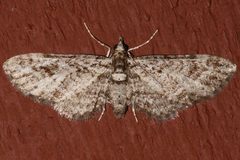
Narrow wings and characteristic resting posture distinguish Eupithecia from other geometrid . Specific identification of E. maestosa requires examination of genitalia or comparison with similar western North American Eupithecia . The dark yellow-brown and grey coloration helps separate it from brighter or more patterned . are smaller than many other geometrids in the same .
Images
Appearance
have a wingspan of 17–21 mm. Forewings and hindwings are narrow and elongated, typical of the . Coloration is dark yellow-brown and grey. The body is slender with relatively long legs. are and approximately half the body length. At rest, wings are held flat or slightly folded, overlapping the .
Habitat
Wooded and shrubby areas, including dry mixed conifer forest with oak components. Found from low elevations to at least 7,000 feet. Associated with diverse floral vegetation that supports nectar feeding and presumably larval development.
Distribution
North America: extreme western Alberta west to Vancouver Island, north to northern British Columbia, south to Texas and California. Core range spans the western cordillera and adjacent regions.
Seasonality
are on wing nearly year-round in California. period likely more restricted at higher latitudes and elevations, though specific dates are not documented.
Behavior
are and attracted to light. Documented visiting apple flowers, indicating nectar-feeding and potential role in nocturnal pollination. Resting posture with narrow wings held flat or slightly folded is distinctive.
Ecological Role
function as . A 2021 study documented Eupithecia visiting apple flowers and contributing to pollination services comparable to pollinators. Larval unknown but typically feed on flowers, seeds, or foliage of diverse plants.
Human Relevance
Beneficial as in agricultural settings, particularly apple orchards. No documented pest status. Attracted to blacklights, making it accessible for study and observation.
Similar Taxa
- Other Eupithecia speciesMany western North American share narrow wing shape and resting posture; genitalia examination often required for definitive separation.
- Other GeometridaeBroader wings, different resting posture, and generally larger size distinguish most other geometrids.
More Details
Taxonomic note
The specific epithet 'maestosa' (Latin: mournful, gloomy) likely refers to the somber dark coloration.
Research significance
Photographic documentation in a 2021 pollination study highlights ongoing discovery of insect services even in well-studied agricultural systems.